JENNIFER KESSE
COLD OPEN
It’s a Tuesday morning in January 2006. The kind of morning that blends into every other weekday. The alarm goes off. Coffee brews. Cars pull out of parking lots and onto familiar roads. People are thinking about meetings, deadlines, traffic. Nothing about the day feels remarkable.
In Orlando, Florida, a 24-year-old woman is starting her routine.
She’s done this countless times before. She wakes up. She showers. She gets dressed. She lays out clothes, deciding what feels right for the day ahead. Her condo is quiet, safe, familiar. This is a life that finally feels settled.
She locks her door and heads out, expecting to be gone for the day and back again that evening.
This is the mundane part of life, the unordinary – the walk to the car, the drive to work, the same stretch of time between home and office that most people never think twice about.
But somewhere between her front door and where she’s supposed to be next, the tone shifts.
No one hears a struggle.
No one sees an encounter.
No clear line marking when the day stops being normal.
Within hours, a panic begins to spread. Phone calls go unanswered. A routine breaks. A family realizes something isn’t right.
And in the 20 years that follow, that quiet Tuesday morning will become one of the most examined stretches of time in Florida history – measured in minutes, revisited in fragments, and defined by everything that can’t be explained.
This is the story of what happened to Jennifer Kesse (pronounced Kessie).
I’m Madison McGhee, and this is Frozen Files.
CHAPTER 1: When the Phone Went Silent
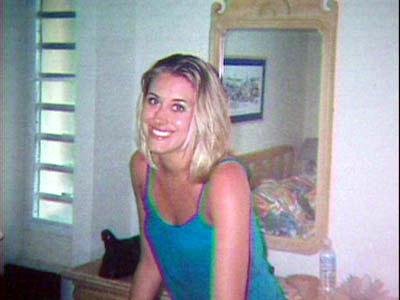
On the morning of January 24, 2006, Jennifer Kesse didn’t show up to work. She also missed an important meeting. That alone was enough to raise concern. Jennifer was reliable. She showed up. She followed through. She called if she was going to be late.
When hours passed with no word from her, the silence started to feel wrong. At around 11:00 a.m., Jennifer’s employer – who also happened to be a close friend of her parents – called Drew and Joyce Kesse to ask if they knew where their daughter was. They didn’t.
The Kesses tried to reach Jennifer immediately. They called her cell phone. It wasn’t that there was no answer, the call went straight to voicemail. Jennifer had gotten that phone when she was 16. It had never gone to voicemail before. That was the moment everything shifted. This wasn’t a missed meeting. It wasn’t a busy morning. It wasn’t Jennifer forgetting to call. Something wasn’t right.
Drew and Joyce got in the car and started the two-hour drive to Orlando, bringing Jennifer’s brother Logan with them. As they drove, they kept calling. Friends. Hospitals. Jennifer’s boyfriend. Anyone they could think of. No one had seen her. No one had heard from her.
Then they contacted the head of maintenance at Jennifer’s condo complex and asked him to check one specific thing: whether Jennifer’s car was parked in its assigned space. When he said it wasn’t, they asked him to go inside her condo. He agreed and brought another employee with him. Jennifer wasn’t there either. Inside, everything looked normal. Nothing appeared disturbed. There were no signs of forced entry. No broken doors. No broken windows. Nothing suspicious. No obvious reason to be concerned.
CHAPTER 2: The Condo That Looked Normal
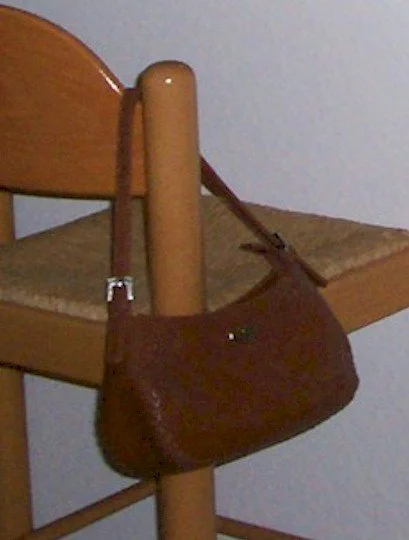
When Drew, Joyce, and Logan arrived in Orlando, they went straight to Jennifer’s condo. Inside, they could tell that Jennifer had slept in her bed. She had taken a shower. She had blow-dried her hair. There were clothes laid out clearly deciding what to wear to work that morning. Her car, however, was still gone. So were her phone, her keys, her purse, and her iPod.
Based on everything they were seeing, and what they knew about Jennifer, her family believed she likely left the condo intending to go to work sometime between 7:30 and 7:45 a.m. that morning. What happened after that was unknown. There were a lot of unanswered questions, but one fact was undeniable: 24-year-old Jennifer Kesse was missing.
Her parents contacted police and asked for an officer to meet them at the condo to take a missing person report. An officer did arrive that afternoon. But according to Jennifer’s family, the response felt dismissive. Drew later said, “He just laughed and said ‘she probably got in a fight with her boyfriend and went to blow off steam.” But her parents knew that wasn't Jennifer's style.
With little sense of urgency coming from law enforcement, Jennifer’s family began organizing their own search. By around 4:00 p.m., Jennifer’s boyfriend Rob and several friends had gathered at the condo. It became an informal command center. Flyers were printed. People spread out to canvas the area. Neighbors were asked if they’d heard or seen anything unusual. But no one had.
Jennifer’s brother began approaching construction workers at the complex, asking if anyone had seen her that morning. At the time, the complex was being converted from apartments into condos. Construction crews were everywhere. But no one would talk to him. No one would answer his questions.
As the day wore on, there was still no sign of Jennifer – and still no meaningful help from the police. That evening, local news outlets began reporting on her disappearance. Public attention – and the persistence of Jennifer’s loved ones – started to apply pressure. An investigation was finally opened. But for days, there were no leads.
This is the part of the story where families start doing the job they never should have to do. Because when someone goes missing, especially an adult, there’s often this immediate impulse to explain it away, to soften it, to make it less urgent. “She’ll turn up. She needed space. She’s with someone and just hasn’t called.”
But here’s what gets lost in that thinking: the people who love them know when something is wrong. They can sense it.
Jennifer’s parents didn’t panic because they were dramatic. They panicked because the details didn’t line up – the bed, the shower, the clothes laid out, the phone going straight to voicemail, the car missing. That’s not someone blowing off steam. That’s a routine being interrupted. That’s a red flag. You can’t ignore the red flags.
When law enforcement hesitates – when they wait for proof of violence instead of recognizing the absence of normalcy – time slips away. Evidence disappears. Windows close. I’ve learned this the hard way.
In cases like Jennifer’s, the most dangerous word isn’t missing. It’s the assumptions covered up by the word “probably”. Because “probably” buys comfort. And comfort costs time.
CHAPTER 3: A Life in Motion
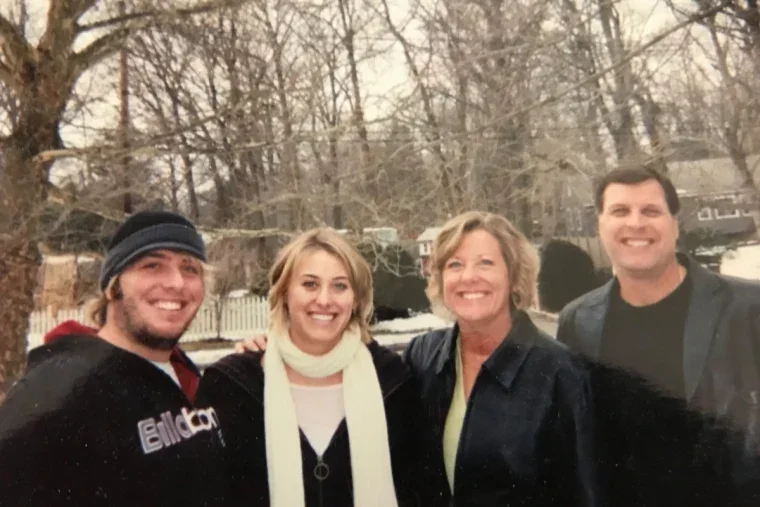
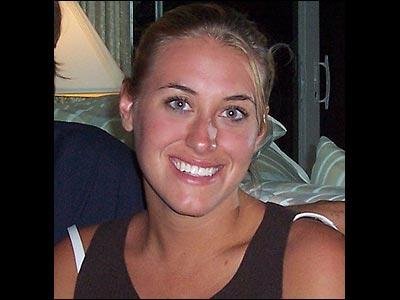
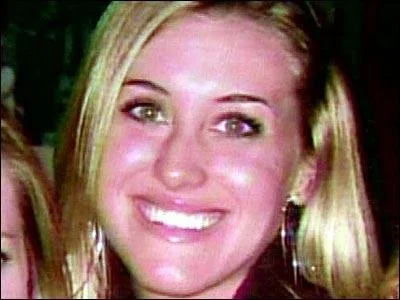
Jennifer Joyce Kesse, known as Jenn to the people who loved her, was born on May 20, 1981, in New Jersey. She grew up in Florida with her parents, Drew and Joyce, and her younger brother Logan, and from an early age, she had a presence people noticed.
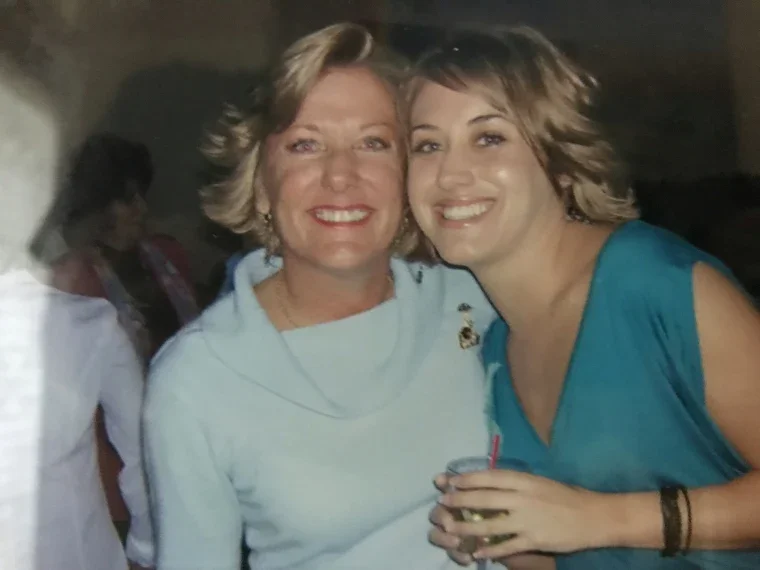
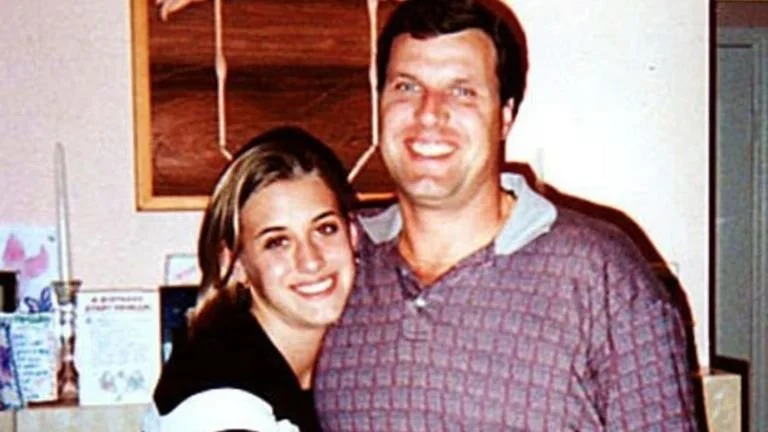
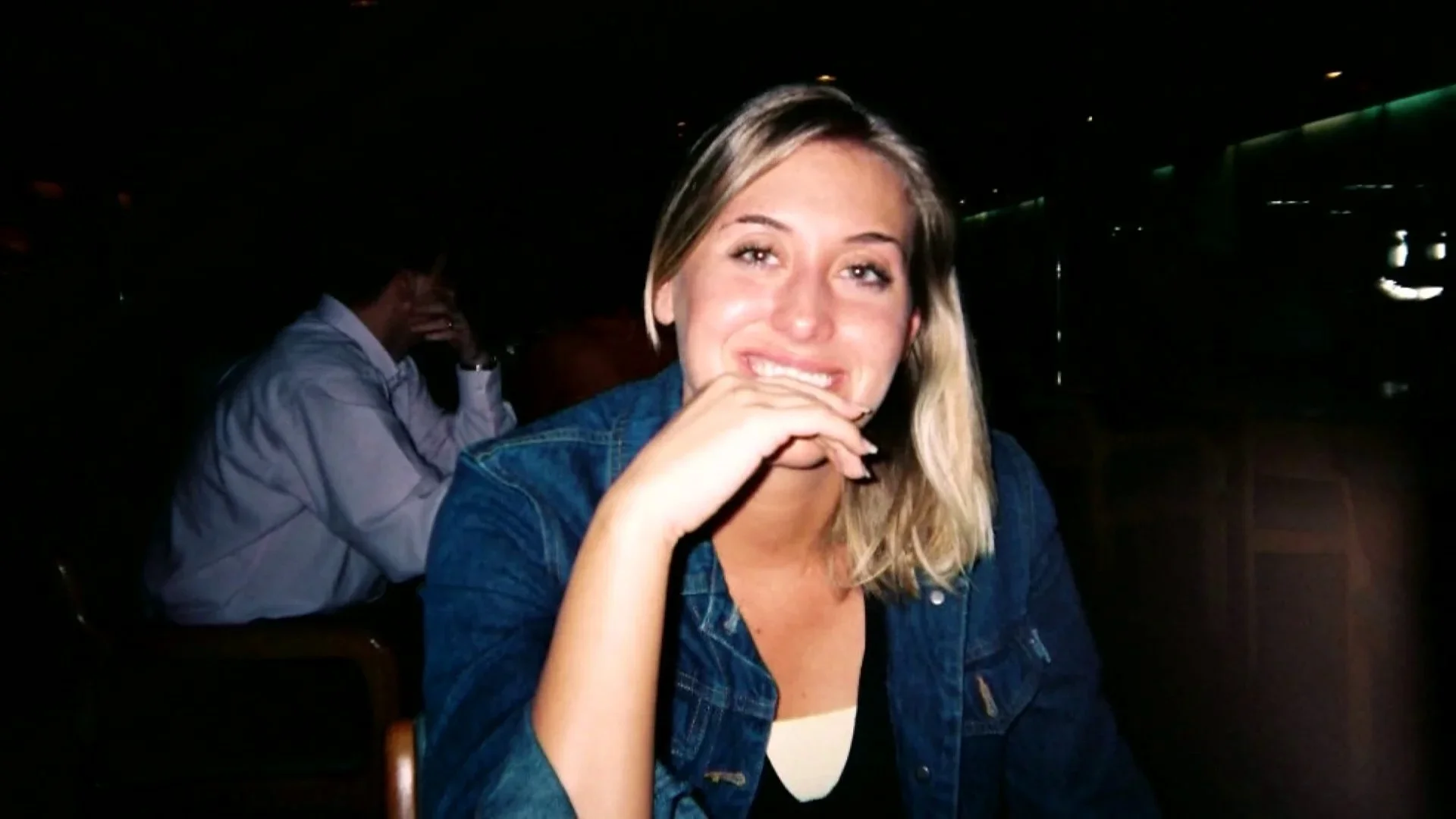
Her mother would later tell CBS, “She walked into a room and people noticed her. She was just so vibrant and really full of life.” Her father Drew described her as “smart, stubborn, loving and kind.” Those weren’t just traits. They were natural patterns – ways Jennifer moved through the world.
Jennifer had an ease with people. She made friends quickly, but she wasn’t a people-pleaser. The people close to her say you always knew where you stood. She was warm, but direct. Confident enough to stand up for herself. Comfortable taking up space. I like to think of those people as kind, not nice. They aren’t superficial but they are genuine and generous. Getting to know Jennifer through making this episode made me wish I could be friends with her.
After graduating high school, Jennifer enrolled at the University of Central Florida in Orlando. She joined the Alpha Delta Pi sorority, built a close-knit social circle, and graduated in 2003 with a degree in finance. She stayed in Orlando after college and accepted a position as a finance manager at Central Florida Investments Timeshare Company.
Jennifer didn’t just settle into the job – she excelled. Promotions came quickly. By the end of 2005, Jennifer had moved up multiple times and was establishing herself as someone people trusted and relied on. At just 24 years old, she was building the kind of life many people are still working toward.
No part of Jennifer’s story included isolation. She never did it alone. Jennifer was deeply connected to her family. She spoke to her mother every single day. The physical distance between them didn’t loosen that bond – it just became part of the routine that they had to work around.
Around that same time, Jennifer was dating Rob Allen, a man she’d met about a year earlier at a bar. Rob lived in Fort Lauderdale, roughly three hours away, and again the distance didn’t keep them apart. They saw each other every weekend. They talked constantly. Rob later told CBS, “We’d communicate four, five, six, seven times a day, every day. She became my best friend.”
Her consistent communication is notable. Because when Jennifer stopped answering the phone, it wasn’t just unusual. It was unprecedented.
CHAPTER 4: She Did Everything Right
In November 2005, Jennifer reached a milestone she was especially proud of. She bought her own condo in southwest Orlando, at a complex called Mosaic at Millenia. She moved in on November 24, just two months before she disappeared.
Jennifer chose the complex deliberately. She liked that it was gated and there was a security guard. Safety was important to her. The people who knew her best all say the same thing – Jennifer was careful and cautious. Her sorority sisters used to call her “mother hen” because she was always looking out for everyone else – making sure people got home safely.
Jennifer took all the precautions. She carried pepper spray. She checked in when she went somewhere new. She stayed on the phone while walking to her car or back to her condo. If a maintenance worker came to her unit, Jennifer would call someone and stand at the door with it open. She trusted her instincts and took responsibility for her own safety.
This part of Jennifer’s story sticks with me. Even with a passion for true crime, I balance caution with trust very delicately. I don’t believe in living life in fear, but understand you have to be aware and not naive. I have been Jennifer, maybe you have too.
When you’re a woman in your twenties living alone, this kind of vigilance isn’t paranoia. It’s training. It’s a set of habits you build quietly, over time. You learn how to move through the world while calculating risk. You learn what feels safe, what doesn’t, and how to listen to the voice in your head that says pay attention.
Jennifer did all of that. She did everything women are “supposed” to do to protect themselves.
When someone like Jennifer disappears, it forces a question we don’t like asking: if all of those measures aren’t enough, then what is?
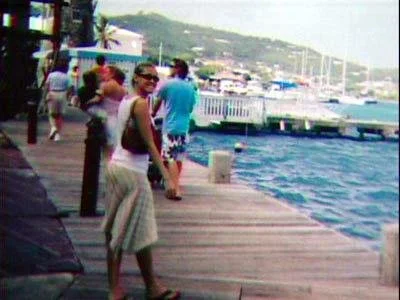
The weekend before Jennifer disappeared, she briefly stepped outside her routine. She traveled with Rob and a group of friends to Saint Croix in the U.S. Virgin Islands. She left Orlando after work on Wednesday, January 18, 2006, drove to Rob’s place, and the next day they flew out together.
Rob later told CBS about the trip, saying, “It was just perfect. A lotta cocktails. A lotta sun. A lotta beach. We had an awesome time. We joked we should just stay there and just not come back to the real world.” They returned on Sunday. Jennifer spent that night at Rob’s home, and early Monday morning – January 23 – she got in her car and drove straight to the office to go to work in Orlando.
That evening, around 6:00 p.m., Jennifer left her office, wishing her boss a good night as she walked out of the building. Later, she called home. She spoke with her father, her mother, and her brother. Just before 10:00 p.m., she called Rob, something she did every night before going to bed.
Rob later said they had a minor disagreement during the call – nothing dramatic, just the strain that can come with long-distance relationships. They promised to talk again in the morning, not knowing that conversation would be the last time anyone spoke to Jennifer.
The next morning – Tuesday, January 24 – Rob expected to hear from her. Jennifer usually called or texted before work. When she didn’t, he tried calling her shortly before a 9:00 a.m. meeting. The call went straight to voicemail. To Rob, despite the argument the night before, that didn’t sit right.
By lunchtime, he still hadn’t heard from Jennifer. His concern was growing. Almost simultaneously, Jennifer’s employer reached out to her parents to say she hadn’t shown up for work. That call set everything in motion.

CHAPTER 5: The First 24 Hours
Once the Orlando police began treating Jennifer’s disappearance as a missing person case, she was formally entered into the system as a missing person, and an alert was issued for both Jennifer and her car.
Detectives then moved quickly through the standard early steps. They checked for activity on her debit card. They attempted to “ping” her cell phone to determine its location. Neither produced anything useful. There was no activity on her card, no activity on her phone, no digital trace of where Jennifer could be.
Detectives also processed Jennifer’s condo. But by that point, the scene had already been compromised and no usable evidence was recovered. In the hours before police took the case seriously, Jennifer’s family had been allowed to use the condo as a command center. Friends and loved ones had come and gone, searching for answers and trying to help.
At the time, no one realized what that would mean later. They weren’t contaminating a crime scene on purpose. They were doing what families do when someone they love disappears – they were trying to find her.
When someone you love goes missing, you’re not thinking in terms of evidence or procedure. You’re thinking in terms of urgency. You’re calling anyone who might know something. You’re opening doors. You’re touching things. You’re moving through space looking for answers, not realizing that space might later be called a crime scene.
And especially in 2006 – before true crime podcasts, before widespread conversations about preservation – families weren’t warned that they could be jeopardizing investigations. They weren’t told to stop. They weren’t told what mattered. They were just doing the best they could.
There were other limitations to the investigation. Surveillance cameras had not yet been installed at the condo complex, so there was no footage showing who was there that morning.
Detectives spoke with the security guards, who were supposed to maintain a log of visitors and license plates entering the property. That log was incomplete. Detectives also canvassed neighbors, but no one reported seeing or hearing anything unusual.
Based on everything detectives knew so far, they agreed with the Kesse family. It seemed like Jennifer left her condo on the morning of January 24 to head to work. What happened after that was still unclear.
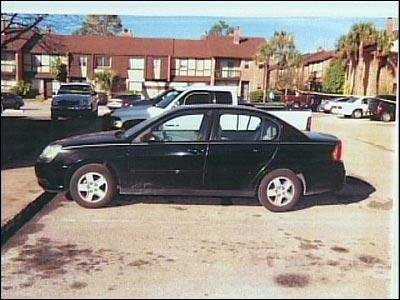
Investigators did receive two tips from witnesses who reported seeing a dark-colored Chevy Malibu – consistent with Jennifer’s car – driving erratically near the exit of the Mosaic at Millenia complex, close to Conroy Road, at around 7:45 a.m. on the 24th.
The witnesses couldn’t identify who was inside the vehicle, only that its movement caught their attention. But the timing stood out. It aligned with when Jennifer would normally be leaving for work.
These tips raised questions investigators couldn’t yet answer. Was Jennifer driving? Was someone else in the car with her? And if so, why was the vehicle swerving the way it was? At that point, all detectives could do was document the tips – and wait.
CHAPTER 6: Working From the Inside Out
As the investigation into Jennifer Kesse’s disappearance continued, detectives started working from the inside out. First, they spoke with the people closest to her. Her family was questioned and quickly cleared. Her boyfriend Rob was examined more closely, as romantic partners often are.
He later told CBS, “They started asking me if you’d had an argument with her, or if you’d had disagreements or you’d done something to her. I mean, it was kinda nerve-wracking.”
Rob told detectives he was at work in Fort Lauderdale that morning, several hours away. His cell phone records confirmed he was there. He was ruled out as a suspect.
Police also spoke with Jennifer’s ex-boyfriend, who had been drinking at a bar near her condo the night before she disappeared, as well as a co-worker who was reportedly very interested in Jennifer. Neither was ever named as a suspect.
As days passed, investigators were left with few solid leads and an expanding field of unknowns. Jennifer hadn’t vanished in the middle of the night. She hadn’t disappeared after a fight or a night out. She had vanished during the most ordinary part of her day – leaving for work. With each passing hour, the window to understand what happened during that short stretch of time was closing, because whatever answers existed between Jennifer’s front door and her car were already slipping away.
CHAPTER 7: The Car
Two days after Jennifer disappeared, on Thursday, January 26, police finally got their first major break.
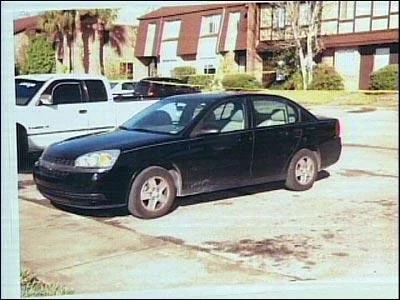
Jennifer’s car – a black 2004 Chevy Malibu – had been found abandoned at the Huntington on the Green Condominiums, about 1.2 miles down the same road from where she lived.
A tenant at the complex called police that morning after recognizing the vehicle from news coverage. The car, they said, had been sitting in front of their apartment for several days.
When officers arrived, they immediately searched the vehicle. Inside, there were no obvious signs of violence. No blood. No visible forensic evidence. The car was neat – almost unusually so. To Jennifer’s parents, the lack of evidence didn’t bring relief. It raised concern. They believed the car may have been wiped clean.
Some of Jennifer’s belongings were still inside. A DVD player her boyfriend had recently given her sat in the backseat. That detail made robbery or carjacking seem unlikely. But the items she almost certainly would have had with her – her keys, her cell phone, her iPod, and her purse – were missing. None of those items have ever been recovered.
As officers continued examining the vehicle, they noticed something else. There were handprints on the hood of Jennifer’s car. To Jennifer’s family, those handprints told a story.
Drew later told FOX 13, “If you look really close, it almost looks like someone was slammed down over the front hood, driver’s side, like onto the hood, and then almost pulled off of it. With fingertips and all.”
Bloodhounds were brought in and given Jennifer’s scent. The dogs tracked it from where the car was found back toward her condo complex. Eventually, the scent was lost on the property itself. To investigators, that suggested something unsettling. Whoever parked Jennifer’s car may not have fled the area. They may have gone back.
CHAPTER 8: Thirty-Two Seconds
Next, detectives searched for surveillance cameras at the complex Jennifer’s car was abandoned. They found one – a single camera pointed directly at the area where Jennifer’s Malibu had been parked.
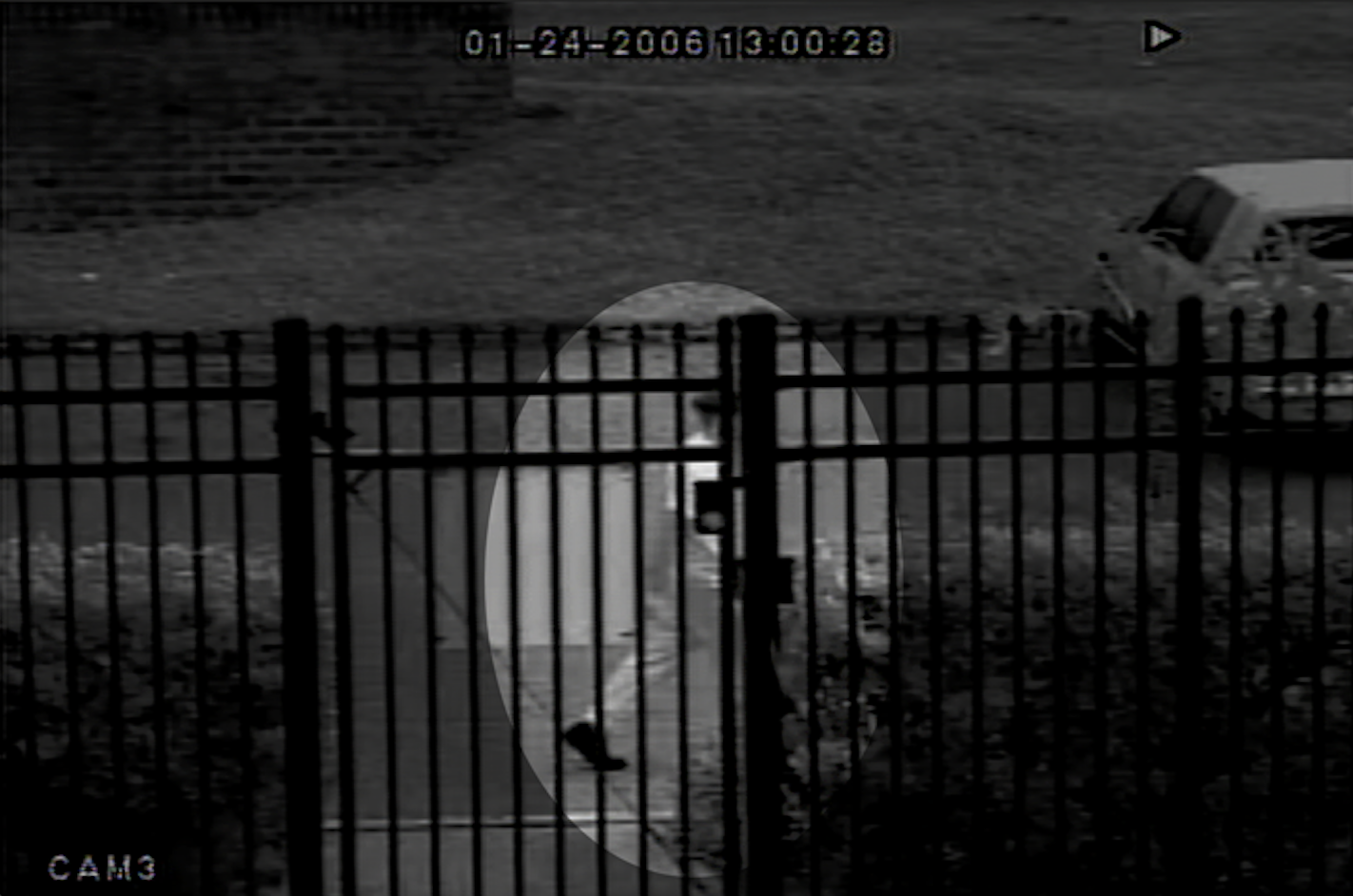
When they reviewed the footage, they saw Jennifer’s Malibu pull into a visitor parking space around noon on Tuesday, January 24 – the same day she disappeared. The person who parked it stayed inside the car for 32 seconds. Then they got out and walked away. Those 32 seconds stood out. Jennifer’s family wondered what was happening at the time – was it spent wiping down fingerprints?
Unfortunately, the video itself offered few answers. The footage was low quality, and the angle made it difficult to identify the person. The camera captured one image every three seconds, and in each frame, the individual’s face was obstructed by a fence post.
Even so, people studied the images closely. Some believed the person was wearing a hat. Others thought their hair might have been pulled back in a ponytail or bun. Some believed the person was wearing white overalls or work pants – clothing consistent with a painter or construction worker. But no one could see their face.
This is the part of this case that makes my stomach turn. Because this isn’t a lack of evidence. It’s evidence that almost works.
You’re that close. You have the car. You have the timeline. You have a person. And then something as mundane as a fence post steps in at exactly the wrong moment – again and again and again.
As a family member, that kind of near-answer is torture. You can see the outline of the truth, but you can’t touch it. And you’re left knowing that the thing standing between you and clarity isn’t some complex mystery – it’s bad luck.
It also confirms that something terrible has happened, but you’re still so far from knowing what.
With no immediate answers as to who the driver could be, the FBI was brought in to help analyze the footage. Based on their assessment, they estimated the person’s height to be between 5 feet 3 inches and 5 feet 5 inches.
That conclusion raised new questions for Jennifer’s family. Jennifer was 5 feet 8 inches tall, and they struggled to understand how someone significantly smaller could have overpowered her.
Still, detectives continued working with the information they had. Based on where the bloodhounds tracked Jennifer’s scent – and the clothing seen in the video – they began to wonder whether the person responsible lived or worked at Jennifer’s complex.
Chapter 9: Across the Hall
That theory resonated with Jennifer’s family.
Jennifer had mentioned the construction workers at her complex to her family before. She said some of them made her uncomfortable – not because they said anything inappropriate, but because they would stop and stare when she walked by. It was obvious enough for her to notice and bring it up.
Like we talked about earlier, at the time, the Mosaic at Millenia complex was in the middle of being converted from apartments into condos. Construction crews were everywhere. Many of the workers actually lived throughout the complex. It’s believed that as many as 10 were living together in an empty unit directly across from Jennifer’s condo.
To make matters worse, because of the construction, many units were vacant. The complex was quieter than it should have been. Less populated. Less observed.
Detectives attempted to interview maintenance and construction workers connected to the Mosaic, but quickly ran into problems. The workforce was large and transient – workers came and went, lived in temporary housing, and weren’t listed on formal leases. It became difficult to determine who was working at the complex in January 2006, who was living there, and who had already moved on by the time questions were being asked.
With few leads and little evidence to build on, the investigation began to stall. There were no major leads for weeks. Those weeks turned into months. Then into years.
Jennifer’s parents were frustrated. They believed police hadn’t acted quickly enough during the most critical window – those first hours when evidence is fresh and witnesses are still close to the moment. In missing person cases, time matters, and in Jennifer’s case, time had already slipped away.
CHAPTER 10: Changing the Law
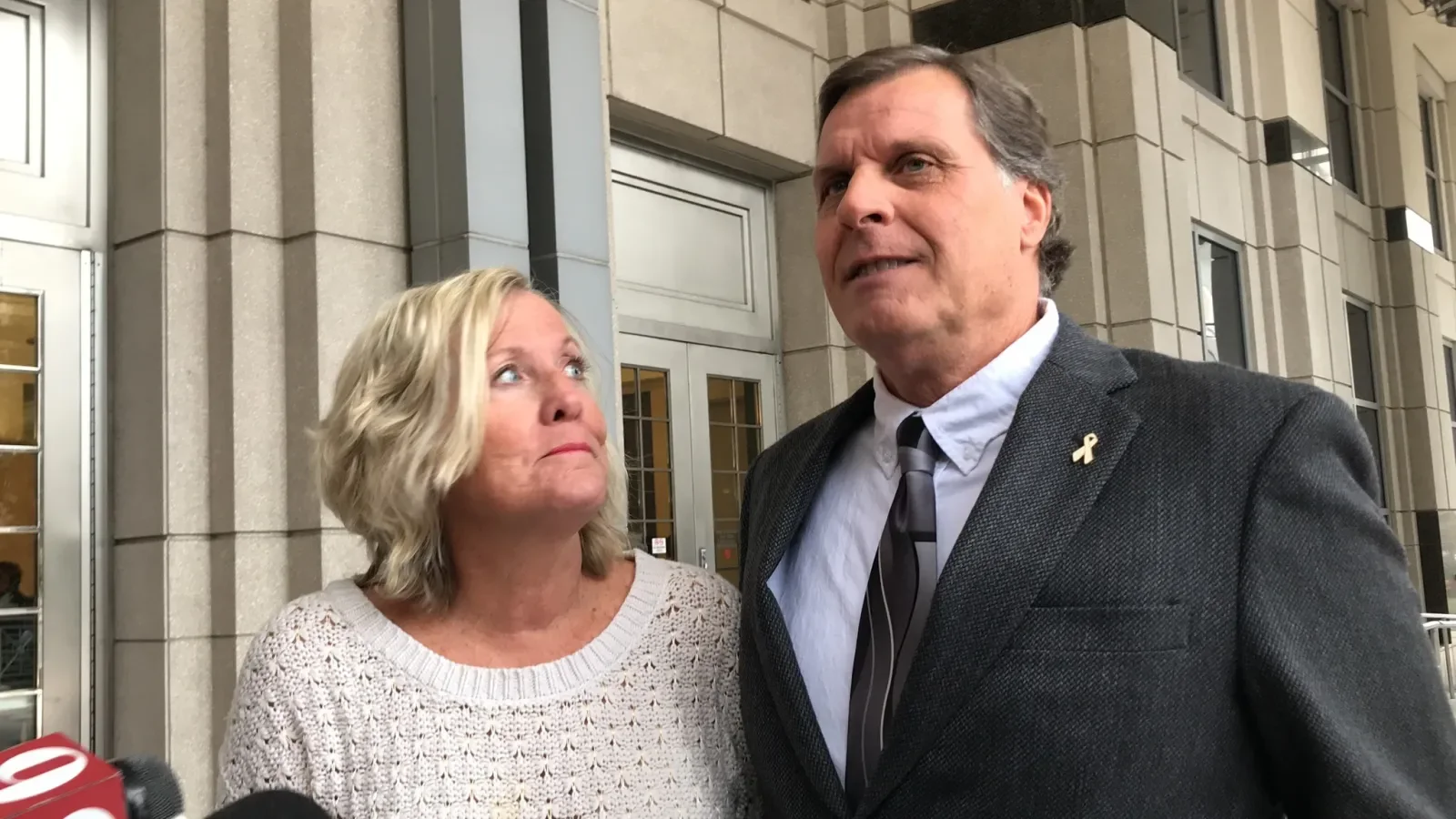
So the Kesse family decided to do something so other families would feel supported if they ever found themselves in this situation. They worked alongside Florida legislators to push for change, advocating for a law that would require every law enforcement agency in the state to establish formal, written procedures for handling missing persons cases – both children and adults.
The legislation spelled out what had been dangerously unclear before. It required agencies to accept and file missing person reports without delay. It outlined how quickly cases had to be entered into state and national databases. And it removed the discretion that had allowed early hesitation to cost families precious time.
If those protections had existed when Jennifer was first reported missing, her family believes the response could have been faster – and taken more seriously. The law came too late to help Jennifer, but the possibility that it could prevent other families from facing the same obstacles mattered deeply to those who love her.
On May 2, 2008, the Florida State Senate passed the legislation, officially naming it the Jennifer Kesse and Tiffany Sessions Missing Persons Act. Tiffany Sessions disappeared on February 9, 1989, in Gainesville, Florida. She has never been found.
The Kesses didn’t stop there. They went on to help pass four additional Florida laws related to missing person classifications – one that raised the minimum age for a missing child alert to 26, another requiring that after 90 days, DNA be entered into local, state, and national databases.
Jennifer Kesse’s disappearance changed Florida law. It protected future victims. It reshaped how missing persons cases are handled. But it sadly did not bring her home.
CHAPTER 11: The Name That Wasn’t Followed Up
Around the time the Jennifer Kesse and Tiffany Sessions Missing Persons Act passed, at least one Orlando detective was still trying to move Jennifer’s case forward.
Detective Joel Wright began revisiting earlier leads, going back through the case file looking for anything that might have been missed. During that process, Detective Wright spoke with a former housekeeper who had worked at Jennifer’s condo complex.
When he showed her the surveillance image of the unidentified person who abandoned Jennifer’s car, she paused. Then she said it reminded her of a man she knew from the complex - someone called “Chino.”
She didn’t know his real name, but she recognized his hair, his clothing, and the way he walked. To her, the resemblance felt familiar.
As Wright dug deeper, he came across an anonymous Crime Line tip that had been called in during the very first week of the investigation. The tip suggested that “Chino” might have been involved in Jennifer’s disappearance.
What troubled Detective Wright was that it wasn’t clear whether that tip had ever been fully investigated – or whether Chino had been interviewed at all. So he kept digging.
He eventually learned Chino’s real name, though it has never been released publicly. What Wright did confirm was that Chino had lived in another building within Jennifer’s condo complex at the time she went missing. He was a maintenance worker there. And just one week before Jennifer disappeared, he had done work inside her condo.
When Detective Wright finally located Chino, he wasn’t living freely. He was in prison, serving time for a statutory rape charge stemming from an offense that occurred two years after Jennifer vanished.
Wright interviewed Chino while he was incarcerated. He asked him about the work he had done in Jennifer’s condo. Chino told him Jennifer had let him inside and that “everything was normal.” He also told him, “I don't have any idea what happened to her.”
Chino agreed to take a polygraph, which he passed. But the test didn’t rule him out. As far as anyone can tell, Chino remains on the list of persons of interest.
CHAPTER 12: Five Years of Silence
About a year after interviewing Chino, Detective Wright was reassigned.
By that point, after years spent working the case, there were still no suspects, no arrests, no clear answers. Wright did, however, share the theory he believed best fit the known facts.
He said, “I believe Jennifer got ready for work. She showered, got dressed. Went outside of her condo – locked the door on the way out. And made it as far as her car. After that, I believe she was abducted.”
When Wright was reassigned, the Orlando Police Department told Jennifer’s parents that every lead had been exhausted. The case would eventually be sent to the FBI, but there was little movement there as well.
Years passed.
By 2016, Jennifer had been missing for 10 years. That year, the state of Florida officially declared her dead. Drew Kesse later said, “That was one of the hardest things I've ever done in my life.” By then, Drew and Joyce had long believed that police were no longer actively working Jennifer’s case. They repeatedly requested access to her case files. Each time, they were denied.
So in 2018, frustrated and out of options, Jennifer’s parents did something no family ever expects to have to do. They sued the Orlando Police Department. Not for money. Not for damages. But for answers. They filed a lawsuit to gain access to the investigative records.
The case was settled in March 2019. As part of the settlement, the Kesses were given access to more than 16,000 pages of records and 67 hours of video and audio recordings – a process that cost them over $18,000.
The agreement also included a critical condition: the Orlando Police Department would no longer lead the investigation. That meant Jennifer’s case would not be actively assigned to anyone – at least not until another agency stepped in. It was a risk her family was willing to take because, as they saw it, nothing was being done anyway.
When Drew and Joyce finally reviewed the records, they made a devastating discovery. According to the files, there was no documented investigative activity between late 2012 and the time of the settlement.
For more than five years, nothing had been written down. Nothing had been tracked. No leads had been investigated. It was absolutely shocking and unbelievable.
You’re stuck between a rock and a hard place. Imagine having to sue the people who were supposed to be helping you – just to know what they did for your missing child. And then, after all of that, imagine opening those records and realizing the answer is… nothing. No notes. No movement. No evidence of effort.
What families are asking for isn’t perfection. It’s not a miracle. It’s work. It’s proof that someone cared enough to keep trying when the headlines faded, which by the way, is an investigator’s job – what they are literally paid for.
I know what it’s like to beg for records, to fight for transparency, to brace yourself before opening a file, hoping there’s something – anything – that shows your loved one mattered. And I know what it’s like to find out there’s nothing there. The silence becomes its own kind of violence.
Because at that point, it’s not just about what happened to Jennifer. It’s about what didn’t happen after.
CHAPTER 13: The Warnings
After receiving the records, Drew and Joyce Kesse sent everything to a private investigator.
By July 2021, that investigator had reviewed the more than 16,000 pages of files multiple times. Based on the records, he developed a theory that felt chillingly plausible:
He believed that one or more of the construction workers living in a vacant unit directly across from Jennifer’s condo may have taken her by surprise as she locked her door to leave for work that morning.
There was nothing in the files indicating that police had ever fully investigated the men living in that unit. Their names didn’t even appear in the records.
As the investigator continued digging, he learned that Jennifer wasn’t the only woman at the complex who felt uneasy around the workers. He spoke with six other women. All of them described similar discomfort.
One woman, Colleen, later spoke publicly. She said, “When I would come home from work, there would be a large group of men outside drinking. And whenever I would have to walk past them, there would be a little bit of comments or just a lot of uncomfortable stares. It wasn't a great feeling. I didn't like it.”
Another woman, Tammy, shared her own experiences. She said she believed workers were entering her apartment when she wasn’t home. She recalled, “There were creepy things like my underwear drawer was tossed one time. The shower was wet, there were footprints in my closet.” Tammy also said she caught a Peeping Tom – someone she believed was a worker at the complex.
A third woman, who did not want to be identified by name, told the investigator that the worker known as Chino often approached her late at night in the parking lot when she returned from work. It made her feel uncomfortable.
The investigator also uncovered a tip that had never been meaningfully pursued. After Jennifer disappeared, a witness reported seeing someone dumping a rolled-up piece of carpet into a lake not far from Jennifer’s condo. That detail was shocking, and crucial, because on the morning Jennifer vanished, the men living in the vacant apartment across from her were installing carpet.
Despite that, the lake wasn’t searched until 2019. When it finally was, multiple dive teams were brought in. Nothing was found.
This is frustrating because these aren’t vague rumors. They’re not psychic impressions or hindsight guesses. They’re specific tips, named witnesses, and repeated patterns. Women saying the same thing, independently, over and over again.
And still – nothing. When detectives ignore tips like this, it doesn’t just stall a case. It rewrites reality after the fact. It turns warnings into coincidences. It turns patterns into bad luck. I know how it feels to read a file years later and realize that the most important question isn’t who did this – it’s why wasn’t this followed up when it mattered?
Once time passes, once evidence disappears, once witnesses scatter… the truth doesn’t just get harder to find. It gets quieter. Silence doesn't help a family heal. It protects the wrong people.
CHAPTER 14: Twenty Years Later
In late 2022, there was finally movement with law enforcement. Jennifer’s case was transferred to the Florida Department of Law Enforcement’s Cold Case Unit. For the first time in years, an agency was formally assigned to investigate her disappearance.
According to Jennifer’s family, FDLE planned to re-interview individuals previously identified as possible suspects, as well as others who may have information that was never fully explored. They were also expected to test evidence using new forensic techniques, including touch DNA.
For the Kesses, it was the first sign in a long time that Jennifer’s case might be getting the attention it had always deserved.
A few years later, on May 20, 2025 – what would have been Jennifer Kesse’s 44th birthday – the Florida Department of Law Enforcement shared an update.
They announced that since taking over the case in 2022, investigators had reviewed thousands of pages of records and spoken with approximately 45 people. Based on that work, they said they no longer considered Jennifer’s case to be “cold.”
FDLE also revealed that they were exploring whether artificial intelligence could help identify the person of interest captured on surveillance footage shortly after Jennifer disappeared. That effort is still ongoing at the time of this recording.
Less than six months later, Jennifer’s parents shared another development. Detectives had identified new leads. Untested DNA had been located and sent out for analysis. The pool of persons of interest had been narrowed to a small number, and investigators were, in their words, “working heavily on” those individuals.
For Jennifer’s family, it was the kind of progress they hadn’t felt in years.
On January 24, 2026, 20 years passed since Jennifer disappeared. Drew and Joyce marked the somber date by speaking with the media. When asked how long they intended to keep searching for their daughter, they didn’t hesitate.
They said, “Until we die. Whatever it takes. We have unconditional love for our children and our family. We've said it every time he's asked. There's no quit in us.”
If you have any information about Jennifer’s disappearance – no matter how small – please contact the FDLE at 407-245-0888 or email the tip line at oroccoldcasetips@fdle.state.fl.us. There is a reward available.
Jennifer Kesse was 24 years old when she disappeared. She was careful, responsible, and deeply loved. She did everything right. And still, despite it all, she vanished.
Two decades later, critical questions remain unanswered. No one has been held accountable. And the full truth of what happened that morning has yet to come to light.
Someone knows what happened to Jennifer Kesse. And until that person comes forward, her family will continue to search – not because they can’t let go, but because Jennifer deserves answers. And she deserves to come home.
CREDITS:
Thanks for listening to Frozen Files a Yes! Podcast
To help this show reach a wider audience and help these victims and their families gain more attention on their cases, please follow, subscribe, rate, and review wherever you are listening. Your curiosity could crack the case.
Recorded in Los Angeles at KeyFrame Studios
This episode was produced, written, hosted, and edited by Madison McGhee
Produced by Nick Baudille
Produced, written, and researched by Haley Gray
Production design by Stephen Hauser
Creative direction by AJ Christianson
All additional sources are linked in the show notes.
SOURCES:
https://www.cbsnews.com/pictures/jennifer-kesse-disappearance-timeline/
https://www.cbsnews.com/news/missing-jennifer-kesses-father-says-we-will-never-stop-looking/
https://www.gofundme.com/f/kasmv-help-us-find-jennifer-kesse?
https://www.cbsnews.com/news/jennifer-kesse-missing-police-search-for-orlando-woman-called-off/
https://people.com/jennifer-kesse-disappearance-missing-case-8774071
https://www.cbsnews.com/news/jennifer-kesse-kidnapping-phantom-figure/