DANA MACKAY + MARY HUFFMAN
COLD OPEN:
Las Vegas, early 1990s.
The city is built on illusion. Lights, sound, spectacle – everything designed to feel larger than life. Along the Strip, casinos rise out of the desert like monuments, each one competing to be louder, brighter, more unforgettable than the last. Inside, there are no clocks, no windows, no sense of time passing. Just movement – constant, deliberate movement.
In Vegas, attention is currency.
People come here to become something – to perform, to transform, to step into a version of themselves that doesn’t exist anywhere else. And for some, that transformation becomes permanent. It’s a career, a persona, a way of life that blurs the line between who they are and who they’re meant to be on stage.
That’s part of what makes this city work.
In a place built on performance, reality doesn’t always take center stage. Stories spread quickly here – rumors, headlines, half-truths – each retelling building on the last until the line between fact and narrative starts to blur. When something violent happens, it doesn’t just stay local. It becomes a spectacle – a story people can’t stop talking about.
By the fall of 1993, that’s exactly what happened.
Inside a home just off the Strip - one known as Mini Graceland – a couple is found dead. He is known as the first Elvis impersonator. She is a former Mrs. Nevada and local business owner. Together, they represent the kind of life Las Vegas promises – visibility, success, reinvention.
The way they’re found feels just as dramatic as the city they lived in, almost like it’s staged. Shot multiple times. Left in the entryway. A scene that investigators – and the media – will describe as a “gangland-style execution.”
From the beginning, the story spreads fast. All across the country, the details are repeated over and over again – an Elvis impersonator, a beauty queen, a home called Mini Graceland. It sounds almost unreal. Because of that, the truth starts to get buried under everything else. There’s so much speculation, assumptions, and rumors. But behind all of that noise, two people lost their lives… and what happened to them has never been answered.
This is the story of Dana MacKay and Mary Huffman.
I’m Madison McGhee, and this is Frozen Files.
CHAPTER 1: Motive or Myth
October 2, 1993, something felt off in a quiet Las Vegas neighborhood.
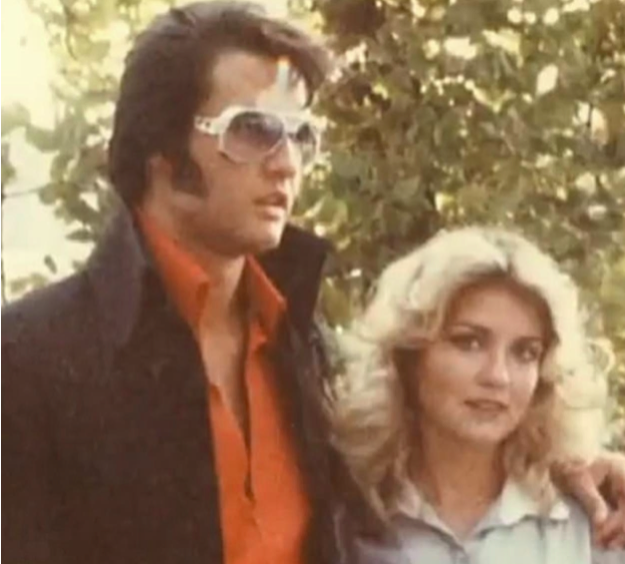
On the 3600 block of Edmund Street, residents began to notice that two of their neighbors hadn’t been seen for several days. Dana MacKay and Mary Huffman were both familiar faces – visible, social, consistently part of the rhythm of the neighborhood. The kind of people whose absence was obvious.
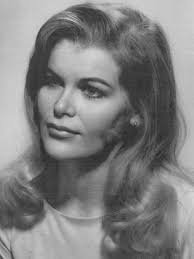
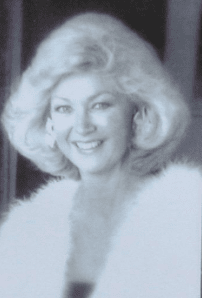
Dana at 37 years old wasn’t just active – he was extremely recognizable. Known as the first Elvis impersonator, he had built a presence that fit seamlessly into the energy of Las Vegas. And Mary, now 49, was a former Mrs. Nevada and a local business owner. She carried that same visibility. Together, they stood out without even trying. They were part of the fabric of their community.
So when days passed without seeing either of them, it didn’t feel like a coincidence. It felt wrong.
A neighbor decided to check on them. Their home – known locally as Mini Graceland – was quiet… too quiet. When the neighbor approached, they noticed a door open. After stepping inside, they were met with something they wouldn’t forget.
Dana and Mary were lying on the floor in the entryway. Both had been shot multiple times at close range. Mary had been shot once in the head. Dana had been shot seven times. The visual of the violence was overwhelming. It left no question about intent.
The media would later describe it as a “gangland-style execution.”
The original detective assigned to the case said, “I believe that [Dana] was running for his life. He was shot multiple times in the head and body. It was definitely an overkill.”
Inside the home, the scene told its own story.
It appeared the couple had just returned from the store on September 30. Groceries were still there – scattered across the floor, left where they had fallen. Food sat out, untouched. As time passed, the air inside the house had begun to change, filled with the smell of meat that had been left too long.
Whatever happened, it happened fast.
When police arrived, they began working the scene. There were signs of forced entry at the back of the home. One room had been ransacked. But even early on in the investigation, something didn’t add up. Cash was still there. Jewelry hadn’t been taken. Nothing appeared to be missing. There were no fingerprints, no weapon, nothing left behind that clearly pointed to who had done this – or why.
But for the people who knew Dana and Mary, the answer didn’t feel like a mystery. From the very beginning, their loved ones believed this wasn’t random. They believed Dana and Mary had been targeted… and that whoever killed them didn’t go there by chance, they were sent.
CHAPTER 2: The King He Became
Dana Christopher MacKay was born on February 12, 1956, in Los Angeles, California.
At the time, Elvis Presley was already reshaping music and culture. Known as the “King of Rock and Roll,” he had become one of the most influential figures of the 20th century – someone people didn’t just listen to, but admired, studied, and tried to emulate.
That kind of influence doesn’t stay on stage. It spills over.
People began dressing like Elvis, moving like him, singing like him. For some, it was admiration. For others, it became something more structured – a performance, a way to step into that identity, even if only for a moment.
Dana was a young child watching all of this unfold in real time.
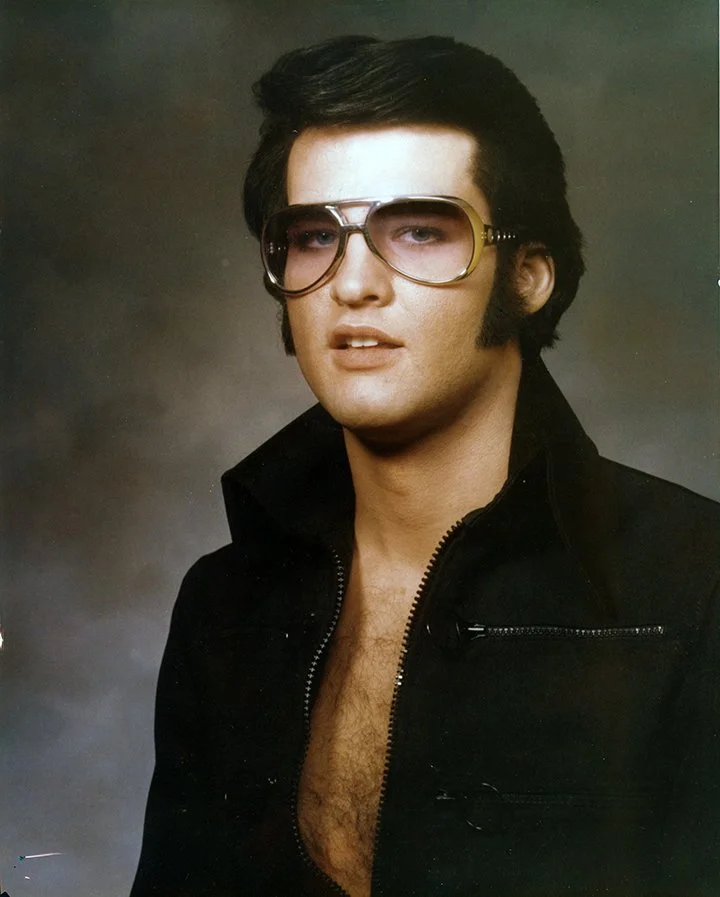
Growing up in California, he paid attention. He studied Elvis closely. He practiced the voice, the movements, mimicking his stage presence, replicating his outfits. Of course, he had the hair. He had everything. By the time he reached adulthood in the mid-1970s, that attention to detail had turned into a spot on impression.
He didn’t just resemble Elvis – he embodied him. Dana could sing like him, move like him, perform in a way that felt familiar, even to people who had seen Elvis himself. He began performing professionally and quickly gained recognition. Many would later refer to him as “America’s first Elvis impersonator.” But Dana didn’t use that word. He preferred “tribute artist.”
In 1977, at 21, Dana moved to Las Vegas to pursue that career full-time. That same year, Elvis died. It’s unclear whether Dana arrived before or after, but either way, the timing placed him at the center of something that was about to grow rapidly.
Las Vegas became the ultimate stage. The city didn’t just embrace performance, it was built for it.
Dana performed at venues like Caesars Palace and later the Dunes, building a reputation almost immediately. What set him apart wasn’t just how closely he resembled Elvis – it was how complete the experience felt. He performed with a live band, didn’t lip sync, creating something that went beyond imitation. For audiences, it felt real. It didn’t register as an imitation.
As his popularity grew, so did the scene around him. More performers followed. More shows were built around the idea. Over time, Las Vegas became known as the Elvis look-alike capital of the world - and Dana was at the center of that movement.
Those who knew him saw it all unfold in front of them. Danny Koker, who hosted the Las Vegas horror program Saturday Fright at the Movies, said Dana’s connection to Elvis wasn’t something he had to force. He said, “Dana just loved the king. He personified the king. He did. It just came so naturally for him that it felt very real and it felt very genuine.”
CHAPTER 3: Life Behind the Stage
Offstage, Dana was building a life in Las Vegas.
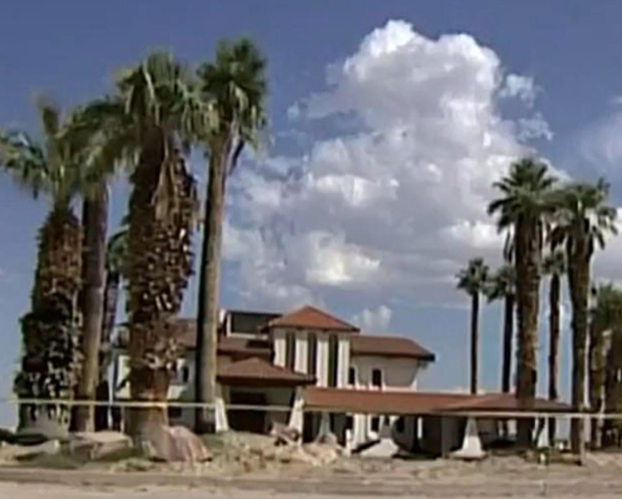
He purchased a home on the 3600 block of Edmund Street and named it Mini Graceland – a reflection of the life he had built around the image and influence of Elvis. The property was expansive, with multiple bedrooms, a circular driveway, and space set within a private, gated area.
It wasn’t move-in ready.
But Dana didn’t mind that. He was skilled at remodeling and took on the work himself, shaping the space into something that felt entirely his. At the top of the home, he built a recording studio with floor-to-ceiling windows that looked out over the Strip. It was performance and privacy in the same space.
His life wasn’t only defined by what people saw on stage. At some point, Dana became a father to two children – a son and a daughter. His daughter Misty later reflected on what that experience was like. She said, “He wasn't like other dads. You look at him and he wasn't like a normal dad. He doesn't look like the average guy. When you're young, you don't understand it. They are like ‘oh her dad is Elvis.’”
By the early 1980s, Dana’s career had expanded beyond Las Vegas. He was touring across the country and internationally, performing for larger audiences and building a name that extended well past the Strip. In 1981, he appeared in the television movie This is Elvis. Though the lead role ultimately went to Kurt Russell, Dana stood out among thousands who auditioned and was still cast in the film. Members of the Presley family were reportedly struck by how closely he matched Elvis, not just in appearance, but in voice and mannerisms.
That recognition continued to build. In 1983, Dana was cast as the original Elvis in the premiere of Legends in Concert at the Imperial Palace. The show would go on to become one of the most enduring productions in Las Vegas, running for decades and earning widespread recognition.
By that point, Dana was the king of his craft.
And somewhere along the way – after 1989 – his personal life was developing, too. Dana began dating Mary Huffman. She eventually moved into Mini Graceland and became part-owner of the home, stepping into a life that had already been shaped in very specific ways, and becoming part of it.
What had started as Dana’s vision was no longer just his. It was something they shared.
CHAPTER 4: The King’s Beauty Queen
Mary was born on May 18, 1944, in Oklahoma. She built her early life around education, earning a degree in home economics before eventually making her way to Las Vegas in 1980. Like many people who moved there, she wasn’t just looking for a place to live – she was looking for a place to build a life… and she did.
Mary opened a business called Encore Fashions, a store focused on quality, pre-owned clothing for women, men, and children. It was practical, community-centered, and reflective of who she was. Over time, she also became active in the Las Vegas Chamber of Commerce, further establishing herself as someone who wasn’t just living in the community, but contributing to it. Staying involved and invested was important to her.
During the 1980s, Mary was also a wife and a mother. She had a daughter, Michelle, and balanced those roles alongside her professional life. She had to move between home, business, and community in a way that required consistency and intention.
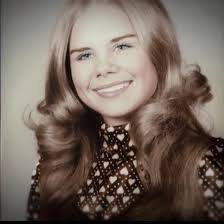
In 1989, at 45 years old, Mary did something for herself. She entered the Mrs. America pageant, which was designed to recognize married women – not just for appearances, but for their roles within their families, careers, and communities. Contestants ranged in age, background, and life experience – each representing their state before advancing to the national stage.
It was no surprise that Mary won the pageant – she embodied everything the pageant stood for. She was named Mrs. Nevada. She was also awarded Mrs. Congeniality – a recognition that reflected not just how she presented herself but how she connected with others. Her charisma was palpable.
When she went on to compete in the Mrs. America pageant, she was asked why she wanted to win. She said, “It is my desire to win this pageant to help the people of the United States become aware that Nevada is a wonderful place to live, work, and raise a family, and also to encourage married women to find out the problems in their communities and be a part of the solution.”
She didn’t win the national title, but reaching that level required dedication, visibility, and commitment. Mary had all of those things.
CHAPTER 5: A Life Together
That same year, Mary’s personal life changed as well. In 1989, she went through a divorce. Not long after, she began a new relationship with Dana MacKay.
For her daughter, it felt like a positive shift for Mary. Michelle later said, “I was excited for her, very excited. You always want your parents to be happy, and she had just gone through a divorce in 1989 and she was very excited to meet Dana and have someone new in her life.”
By all accounts, they had a great relationship. Dana’s friend, Danny, described them in simple terms, saying, “Mary was a wonderful, wonderful gal. She really was. Dana and Mary together were really really wonderful.”
They built a life together inside Mini Graceland. The relationship became serious enough that Mary often referred to herself as Dana’s wife. But legally, they were not married.
From the outside, it looked like two people who had found something that worked. By the early 1990s, things began to shift for Dana professionally. The Elvis tribute scene in Las Vegas had grown rapidly. What had once set him apart was now everywhere, and with more performers entering the space, opportunities began to narrow.
So Dana adapted. He began focusing more on landscaping – a field he had been interested in for years. It was a different kind of work, but it offered stability and a new direction. It was something he could build on that didn’t depend on an audience.
It was certainly a transition, but it came with consistency. He was building toward something new. But that next chapter never had the chance to unfold. Because at Mini Graceland – in the home they had built together – Dana and Mary’s lives were taken.
CHAPTER 6: The Manila Folder
As detectives processed the scene inside Mini Graceland, nothing immediately stood out as missing. The house showed signs of disturbance, but not theft – visible cash was still there, jewelry hadn’t been taken, and nothing of obvious value appeared to be gone.
But when investigators began speaking with Dana’s friends and family, one question kept coming up. They all wanted to know the same thing – had anyone found Dana’s manila folder?
Dana was known for keeping a file with him at all times. It contained everything – his business records, financial information, personal documents, and plans. According to the people closest to him, it wasn’t something he ever left behind.
In the months leading up to his murder, that folder had taken on new importance. Because Dana had started keeping something else inside it – documentation tied to an ongoing lawsuit.
After stepping back from performing full-time, Dana had shifted his focus to landscaping. He specialized in installing large palm trees for luxury properties and resorts. Interesting fact: palm trees are not native to Las Vegas. They were all brought in and planted. Through a supplier in California, Dana could source the trees at a discounted rate. He would purchase them, store them at Mini Graceland, and prepare them for installation.
At the same time, Las Vegas and Clark County were planning a major change to the Strip. Officials wanted to line the median with palm trees – something that, today, feels like a defining feature of the city, but at the time didn’t even exist.
Dana wanted that contract. But taking on a project of that scale required equipment he didn’t have, so he brought in a partner.
He approached his friend Tim Stonestreet, who owned Stonestreet Motor Cars, and together they formed a company called Paradise Plants. Tim invested heavily, spending $100,000 on equipment, including a backhoe, a 40-foot storage trailer, crane equipment, and more.
On paper, the partnership made sense. Dana had the expertise and access to the trees, while Tim brought the financial backing needed to grow the business.
But within months, the relationship unraveled. What started as a business arrangement turned into a legal dispute. In one filing, Dana claimed, “In retrospect it appeared that all Tim was trying to do was obtain my contacts for trees, learn my expertise, and establish his own palm tree company.”
At the center of the conflict was the equipment, most of which was being stored at Mini Graceland. Dana refused to give it up, even when officers came to the property to repossess it.
The lawsuit moved forward, with Tim hiring an attorney from a well- connected Las Vegas firm, while Dana chose to represent himself. Around that same time, Dana had already begun planning his next steps. He had begun discussing a new partnership with his friend Danny Koker, planning to move forward once the legal dispute was resolved. The plan was for Danny to join Dana’s business ventures once the legal battle was over. According to those close to Dana, he was confident he would win.
That confidence came from something specific – something he had in his back pocket. To this day, no one knows exactly what information Dana planned to present in court, but they do know where he kept it… inside that folder.
And two weeks before the trial, where he would have the chance to bring that information forward, Dana was murder with Mary killed alongside him. And the one item people expected to find was gone.
CHAPTER 7: Theories and Noise
Investigators searched Mini Graceland, but they didn’t find the folder. When Dana’s loved ones walked through home themselves, they confirmed what detectives already suspected – it was the only thing missing.
That detail stood out immediately. It raised a question investigators couldn’t ignore, but also couldn’t answer – was the folder the reason Dana and Mary had been killed?
At that point, detectives were left with two primary theories. Either this had been a targeted killing – a hired hit – or it was a robbery gone wrong, where Dana and Mary walked in on someone attempting to take something, possibly that folder, and were killed as a result.
They began by looking at the most obvious connection. Tim Stonestreet. But that lead quickly became complicated. Detectives confirmed that Tim was in Aruba at the time of the murders, which meant he could not have been physically present. But it didn’t rule out involvement. If this had been arranged, the person behind it wouldn’t have needed to be there.
As detectives continued to dig, they uncovered another layer of Dana’s personal life. He had been involved with multiple women at the same time, though it’s unclear whether Mary knew about those relationships.
One of those women came forward with a claim that caught investigators’ attention. She told detectives that on the night of September 30 – the same night Dana and Mary were killed – someone in a car next to hers pointed a gun at her. She said she ducked down and sped away, believing she had narrowly avoided being shot.
To her, it didn’t feel random. She believed she may have been a target too. It’s unclear whether investigators were ever able to link that incident directly to the murders, but police did say they were looking into her account.
By October 7 – five days after Dana and Mary’s bodies were discovered – detectives spoke publicly about their working theories. They confirmed they were considering both a robbery gone wrong and the possibility of a hired hit. At that point, they said no suspects had been identified.
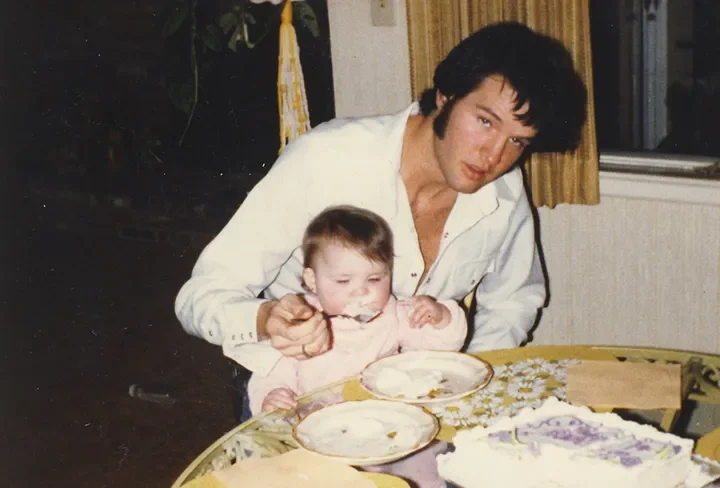
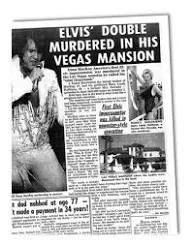
As the case developed, it began to draw national attention. The details were hard to ignore – a well-known Elvis tribute artist, a former Mrs. Nevada, and a home called Mini Graceland. It was the kind of story that traveled quickly, and when it did, it brought more than awareness. It brought chaos and distraction.
Tips began coming in from across the country, many of them focused not on the facts of the case, but on Elvis himself. One detective told the media, “We’ve had psychics call us from back East, some saying that was the real Elvis (who was killed).”
Others suggested a serial killer targeting Elvis impersonators. Investigators had to address it directly. There was no evidence to support those claims. But by that point, the case had already started to shift away from what could be proven, and toward the buzzy theories that people were willing to believe.
CHAPTER 8: Rumors
But while some theories were being dismissed, others began to take hold.
Rumors spread that Dana had been involved in drug trafficking or connected to a dangerous crowd. Investigators briefly explored the idea that the killings may have stemmed from a drug deal gone wrong. But those closest to Dana pushed back strongly against that narrative. Dana didn’t drink or do drugs.
Other rumors followed. There were claims that Dana had been killed over a gambling debt, or that the couple had been caught up in something far more complicated than anyone realized. That kind of speculation grows quickly when there aren’t clear answers and the people involved aren’t there to provide any clarity or explanation.
Dana’s loved ones stepped in and publicly rejected those theories from the beginning. They maintained that the murders were targeted and connected to whatever information Dana had been keeping in that folder. Eventually, investigators ruled those theories out. But by then, the damage had already been done.
What stands out to me here isn’t just what investigators were looking at. It’s what people, community members and officials alike, decided to believe.
When there aren’t clear answers, speculation fills that space fast. And once a narrative takes hold – whether it’s true or not – it becomes part of the case. It changes how people see it. It changes what gets taken seriously. And sometimes, it pulls attention away from what actually matters. And for the families, it adds something they never should have to carry – the burden of defending the dead.
For Dana’s family, the coverage made everything harder. The news wasn’t just reporting on what happened, it was reshaping the narrative and ultimately cost vital time during the investigation. His daughter Misty, who was a teenager at the time, later said the constant media attention added another layer to her grief. Dana’s mother felt the same way, speaking openly about the impact the rumors had on their family. She said, “There’s a lot of insinuations, lies and misquotes that I am very upset about. There are a lot of crazy things going on, and it can be very frightening. It’s a very ugly, ugly thing to have to live through.”
For Misty, the loss itself was complicated. The last time she saw her father had been at a family funeral, where he arrived with a Marilyn Monroe impersonator. Their relationship had changed over time, especially after her parents separated, but that didn’t lessen the impact of his death. She said, “It really hurt because I didn’t get a chance to get close to him.”
She found her own way to cope. Misty would listen to her dad’s old Elvis records – holding onto the part of him that still felt familiar.
CHAPTER 9: A City On Edge
Detectives continued working the case, trying to approach it from every possible angle. One of the paths they explored was whether Dana and Mary’s murders could be connected to another high-profile crime that had taken place just months earlier.
The kidnapping of Kevyn Wynn.
In 1993, Kevyn’s father, Steve Wynn, was one of the most powerful figures in Las Vegas. Fortune Magazine had ranked him as the highest-paid CEO in the country. He owned The Mirage – a resort that opened in 1989 at a cost of $620 million. At the time, it was considered the most luxurious property on the Strip, redefining what a hotel-casino could be.
On the night of July 26, 1993, Steve’s 26-year-old daughter, Kevyn, returned home to her condo in the Spanish Trail community. When she walked inside, two masked men were already there.
They confronted her at gunpoint. Her eyes were covered with cotton balls and tape, and she was forced to remove her clothing, leaving only her underwear. The men then moved her into a dining alcove and took photographs – posing her in different positions to make it appear as though she was participating willingly.
When they were finished, they allowed her to get dressed.
They tied her up, placed her in her own car, and began moving her. One of the kidnappers drove her toward the airport, while the other used a separate vehicle to head to a payphone. Once there, they contacted Steve Wynn.
He was instructed to return to The Mirage, where he would receive further directions. One of the men, who identified himself as “Voss,” demanded $2.5 million for Kevyn’s release. If Steve contacted police, the kidnappers threatened to distribute the photographs they had taken of her.
Steve told them he didn’t have that amount available. The Mirage vault held $1.45 million. Voss accepted that amount. Steve collected the money, then headed to the drop location: a parking lot at Sonny’s Saloon, just a block from The Mirage. After leaving the money, Steve received another call – this time with instructions on where to find his daughter.
He drove to McCarran International Airport. Just after midnight, he arrived and located Kevyn’s car in the parking lot. She was inside, physically unharmed.
Once she was safe, Steve contacted authorities. The FBI quickly joined the investigation, and within a short period of time, they began identifying those responsible.
Ray Cuddy, a 47-year-old health club manager, was arrested first. Then Jake Sherwood, who was 22, and Anthony Watkins, who was 20, were both taken into custody.
Watkins took a deal and told investigators that Cuddy had orchestrated the kidnapping, driven by financial problems and mounting debt. According to his statement, Cuddy and Sherwood had waited inside Kevyn’s garage, while Watkins acted as a lookout from a nearby fast-food restaurant.
Cuddy and Sherwood were ultimately convicted on multiple charges, including extortion, money laundering, and conspiracy. Authorities were able to recover $1 million of the $1.45 million ransom.
CHAPTER 10: The Clear Conclusion
At the time, the Wynn case had drawn significant attention. It involved a well-known Vegas family. Because of that, detectives working Dana and Mary’s murders had to consider whether there could be any connection between the two.
But publicly, no direct link was ever established.
Investigators continued searching for answers in Dana and Mary’s case. They revisited leads, explored possibilities, and tried to build something that could explain what happened inside Mini Graceland.
But they never found enough evidence to support charges for a hired hit. Without that, the case began to change. Investigators ultimately concluded that Dana and Mary had likely been killed during a burglary gone wrong. And as that conclusion settled in, the investigation began to stall. Then, over time, it went cold.
Not everyone accepted that outcome. Dana’s friend, Danny Koker, didn’t believe the investigation had reached the truth. He continued to speak out publicly, maintaining that Tim Stonestreet was still connected to what happened in some way.
At one point, Danny even brought America’s Most Wanted to Tim’s doorstep, hoping to get answers. Tim declined to comment.
CHAPTER 11: No Longer Buried
The fight didn’t end when the case went cold.
Two years after Dana and Mary were killed, a billboard went up offering a $100,000 reward for information leading to an arrest and conviction. It was a public effort to bring attention back to the case – and to generate the kind of tips that might move it forward.
But the calls that came in weren’t what investigators needed.
Detectives said many of the tips involved people claiming they had seen Dana alive. The tipsters believed he was still out there – still performing, still moving through the world as Elvis. In reality, investigators knew those sightings were almost certainly other impersonators – but that didn’t make the situation any less frustrating.
The reward didn’t lead to an arrest. As time passed, the case became quiet again. For nearly 20 years, there were no major developments, no clear movement, no answers.
Then, in 2008, there was another development. Dana’s daughter Misty – now an adult – searched her father’s name online and came across an article stating he had been killed during a robbery gone wrong. She already knew there had been other theories, including the possibility of a targeted killing, and the explanation didn’t sit right with her.
So she called the police. That call led to the case being reopened.
I know what that moment feels like. When something doesn’t sit right, and you have two options. You can either leave it alone… or you can follow it. And following it isn’t simple.
Once you make that decision, you don’t get to go back to not knowing. You start asking questions. You start looking at things more closely. And sometimes, you find things you weren’t prepared for.
But at the same time, not doing anything doesn’t feel like an option either. When it’s someone you love, you carry that feeling with you – that something about their story isn’t finished until there’s closure.
CHAPTER 12: Unfinished Business
Detective George Sherwood was assigned to take another look at Dana and Mary’s murders. He spent months working through what had been left behind. As he poured through the evidence, conducted interviews, and revisited the details – a clearer picture of what happened started to develop. But as he worked through it, the answers didn't hold.
Sherwood told reporters that he did not believe Dana and Mary had been killed during a burglary gone wrong. Instead, he said he was leaning toward a different conclusion – one that pointed back to the theory that had been there from the beginning… a hired hit.
He explained that there were “strong indications this was a murder-for-hire plot” and that “somebody was lying in wait for them…”
He said something that brought the case back to its center, “Somebody wanted that folder, and somebody wanted Dana.”
As part of his investigation, Sherwood said he attempted to speak with Tim Stonestreet. Tim refused. He declined to speak with investigators and did not comment publicly. His attorney spoke for him, maintaining that Tim had already been cleared and suggested that police should instead focus on Dana’s alleged drug connections. Sherwood disagreed. He stated publicly that Dana was not involved in drugs, and that theory had already been ruled out.
Unfortunately, despite the renewed effort, the case didn’t move forward. Over time, it stalled again. In 2017, Misty and Danny spoke with the media to express their frustration. For them, the lack of progress wasn’t a mystery – it was a failure to act.
Danny said, “I have no doubt in my mind, beyond a shadow of a doubt, I am positive who had this done.” He pointed back to what had been missing from the very beginning. “There was money in the house. There was jewelry in the house, but the only thing that was MIA was the file. You know, there is nothing valuable to a burglar about paper. You can’t go to the pawn shop and sell it.”
Misty shared a similar belief. She said, “I know exactly who did it, and I know the cops know exactly who did it, but he’s allowed to get away with it because of his connections.” She added, “My dad was telling people before he died, if something happens to me, this is the person responsible.”
When you step back and look at this case, there’s one detail that keeps coming back. It’s a key in any robbery… Not what was taken, but what wasn’t. Money that was laid out was left behind. Jewelry that could have easily been scooped on the way out was ignored. Anyone going into a house for money, would leave with something.
But it was the folder – the one thing Dana was known for keeping with him – that was gone.
It’s the part that’s hardest to ignore. Because it suggests intent, planning, coordination… and that whatever happened inside that house didn’t start there.
CHAPTER 13: What Remains
Years continued to pass.
The next update came in March 2026, when local news revisited the case. Investigators said that money did not appear to be the motive, though few additional details were shared.
Even now, those closest to Dana and Mary haven’t stopped hoping for answers. Danny said, “I'm hoping that maybe the new folks in charge will just wipe the slate clean on all the lies. And look at the real evidence and hopefully this can get resolved.”
As of today, the murders of Dana MacKay and Mary Huffman remain unsolved. Cold case detectives believe the case can still be solved, but they need more information. Because more than 30 years later, the question of what happened inside Mini Graceland still hasn’t been answered. Anyone with knowledge about what happened is urged to contact the Las Vegas Metropolitan Police Department Homicide Section at 702-828-3521.
CREDITS:
Thanks for listening to Frozen Files a Yes! Podcast
To help this show reach a wider audience and help these victims and their families gain more attention on their cases, please follow, subscribe, rate, and review wherever you are listening. Your curiosity could crack the case.
Recorded in Los Angeles at KeyFrame Studios
This episode was produced, written, hosted, and edited by Madison McGhee
Produced by Nick Baudille
Edited by Alexander Soltis
Produced, written, and researched by Haley Gray
Production design by Stephen Hauser
Creative direction by AJ Christianson
All additional sources are linked in the show notes.
SOURCES:
https://www.newspapers.com/image/477131989/?terms=dana%20mackay%20mary%20huffman&match=1
https://www.newspapers.com/image/477132502/?terms=dana%20mackay%20elvis&match=1
https://www.newspapers.com/image/153126376/?terms=dana%20mackay%20elvis&match=1
https://www.newspapers.com/image/538355184/?terms=dana%20mackay%20elvis&match=1
https://torontosun.com/news/world/crime-hunter-cold-case-murder-of-elvis-imitator
https://www.findagrave.com/memorial/75133899/dana-christopher-mackay
https://lasvegassun.com/news/2008/sep/08/detective-wont-let-case-murdered-elvis-die/
https://www.lvmpd.com/en-us/Homicide/Pages/casesbyyear1990-1999.aspx
https://m.imdb.com/title/tt0083193/plotsummary?ref_=tt_ov_pl
https://www.zillow.com/homedetails/3624-Edmond-St-Las-Vegas-NV-89103/7121292_zpid/?
https://www.8newsnow.com/news/i-team-cold-case-murder-of-elvis-impersonator-heats-up/
Hard Copy, October 7, 1993, https://www.youtube.com/watch?v=GRokNgMwRxA
I-Team, May 5, 2017, https://www.youtube.com/watch?v=LTpbsrp8oJI
https://www.newspapers.com/image/109731534/?terms=dana%20mackay%20elvis&match=1
https://www.history.com/topics/us-states/las-vegas#section_3
https://www.latimes.com/archives/la-xpm-1994-05-05-mn-54241-story.html
https://www.reviewjournal.com/news/the-mirage-turns-20-today/
https://abcnews.go.com/Entertainment/WolfFiles/story?id=92624&page=1
https://news3lv.com/news/local/video-vault-new-podcast-revisits-infamous-wynn-kidnapping
https://lasvegassun.com/news/2000/may/08/wynn-kidnap-figure-ordered-returned-to-jail/