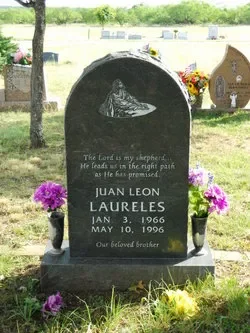
LEON LAURELES
COLD OPEN
It’s just after midnight in May of 1996.
Most people are asleep. The roads are quiet – the kind of quiet that makes everything feel still, predictable. For those who are awake, the night feels routine – late shifts, familiar drives, the same routes taken over and over again without much thought.
In Brownwood, Texas, a man is exactly where he’s supposed to be.
He’s running early, like he always does, pulling into a parking lot he knows by heart, parking slightly off from his usual spot, expecting to walk inside, clock in, and start another overnight shift.
Nothing about the moment feels dangerous. Nothing feels out of place. And yet, within the next 20 minutes, that routine will be broken in the most permanent way.
A car will be found burning on a dark stretch of road outside town in Brown County. A body will be discovered just feet away. A life built around care, responsibility, and quiet consistency will end in violence – leaving behind more questions than answers.
In the years that follow, those questions won’t fade. They’ll deepen – shaped by silence, by missed opportunities, and by the absence of accountability.
And for one woman – his niece, his best friend – they will become impossible to escape.
This is the story of Leon Laureles.
I’m Madison McGhee, and this is Frozen Files.
CHAPTER 1: Burning on 2126
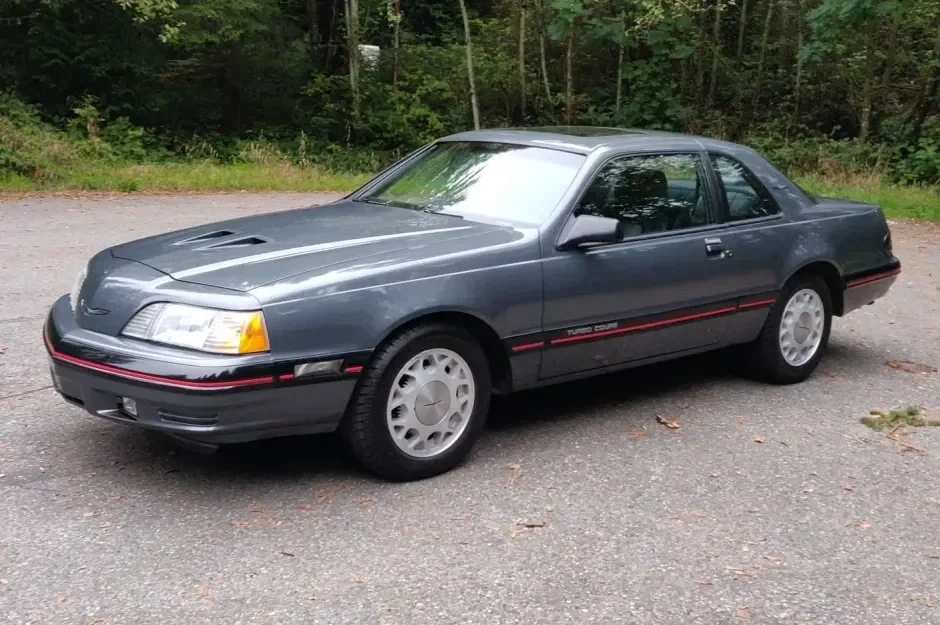
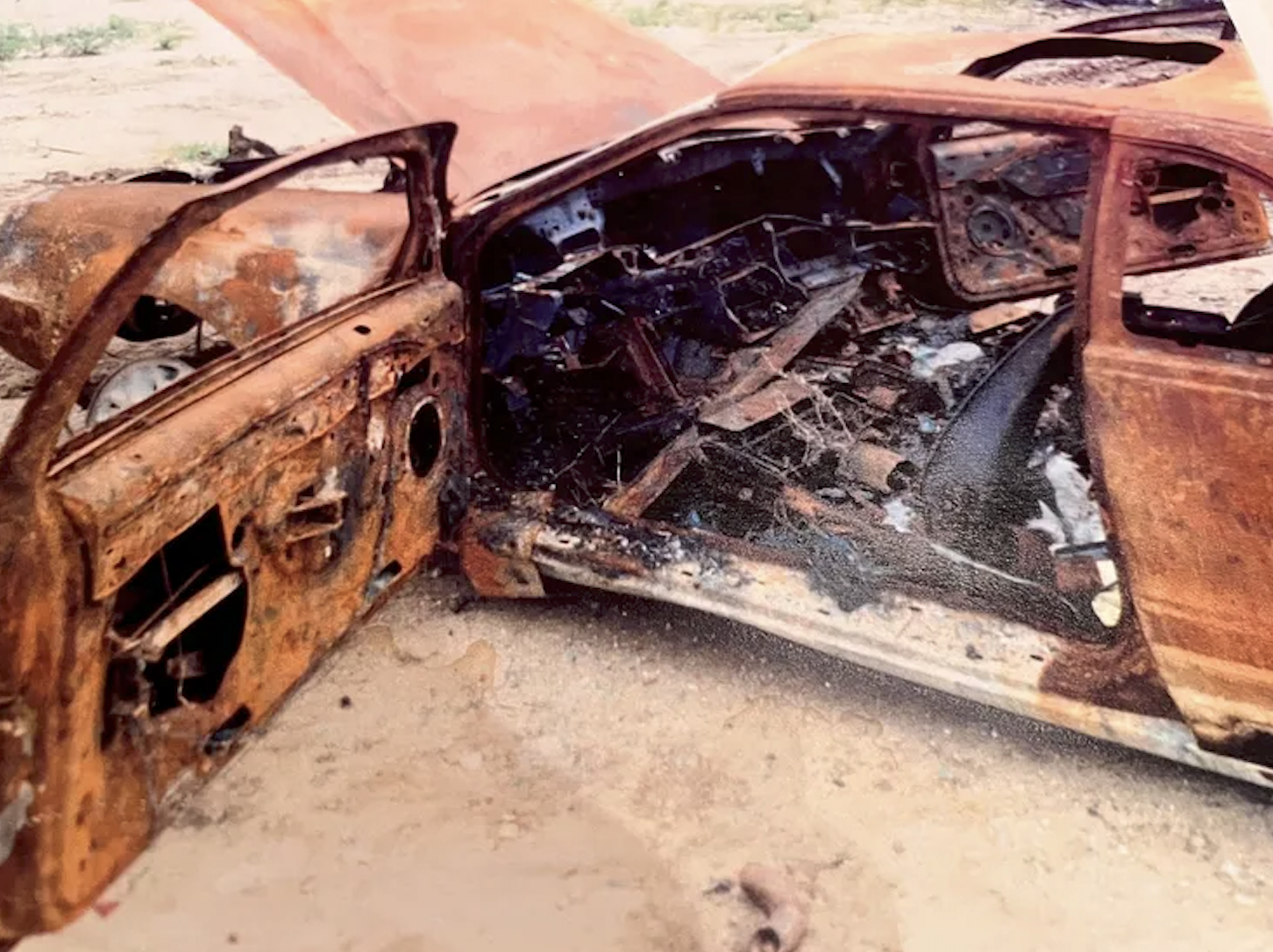
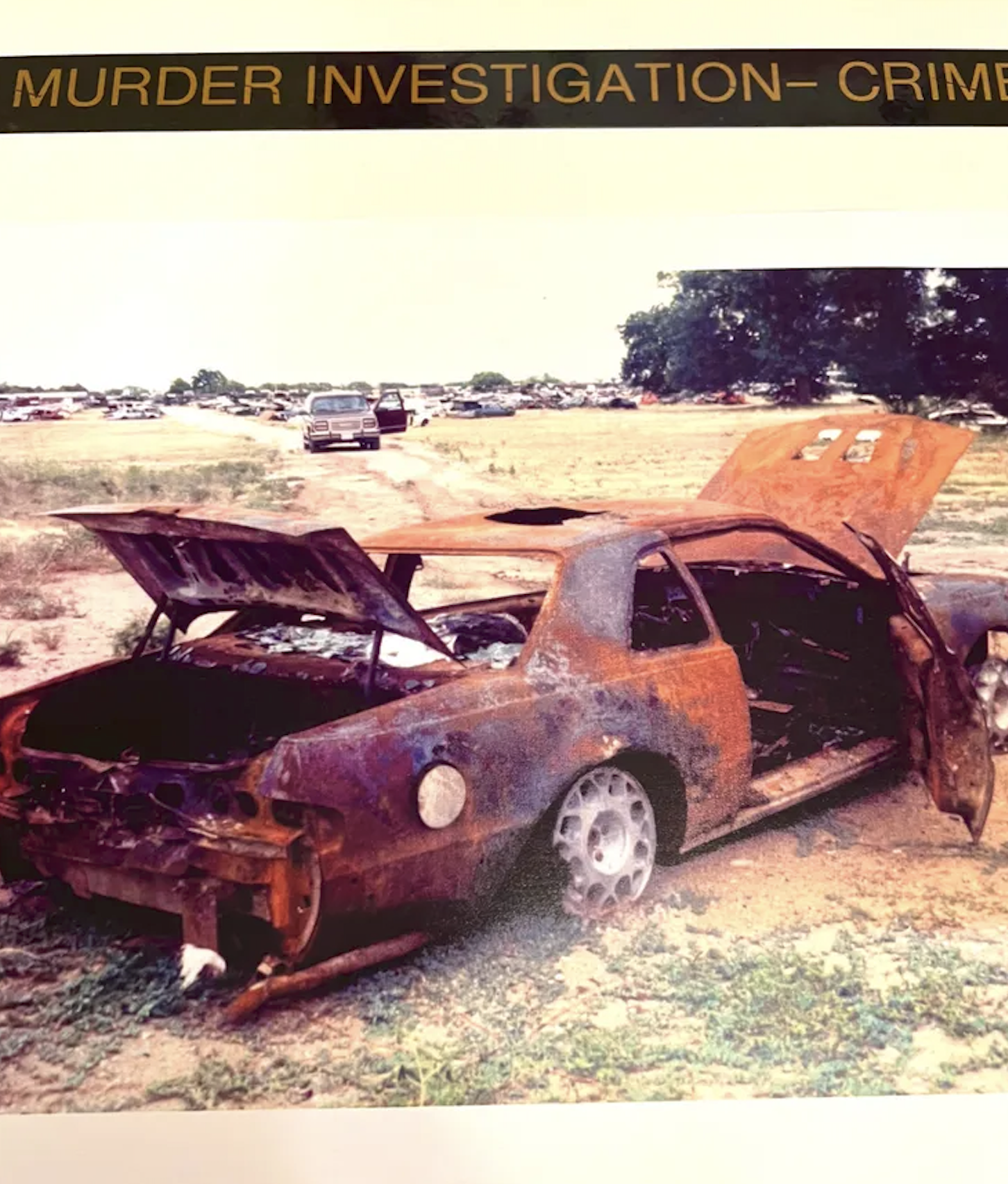
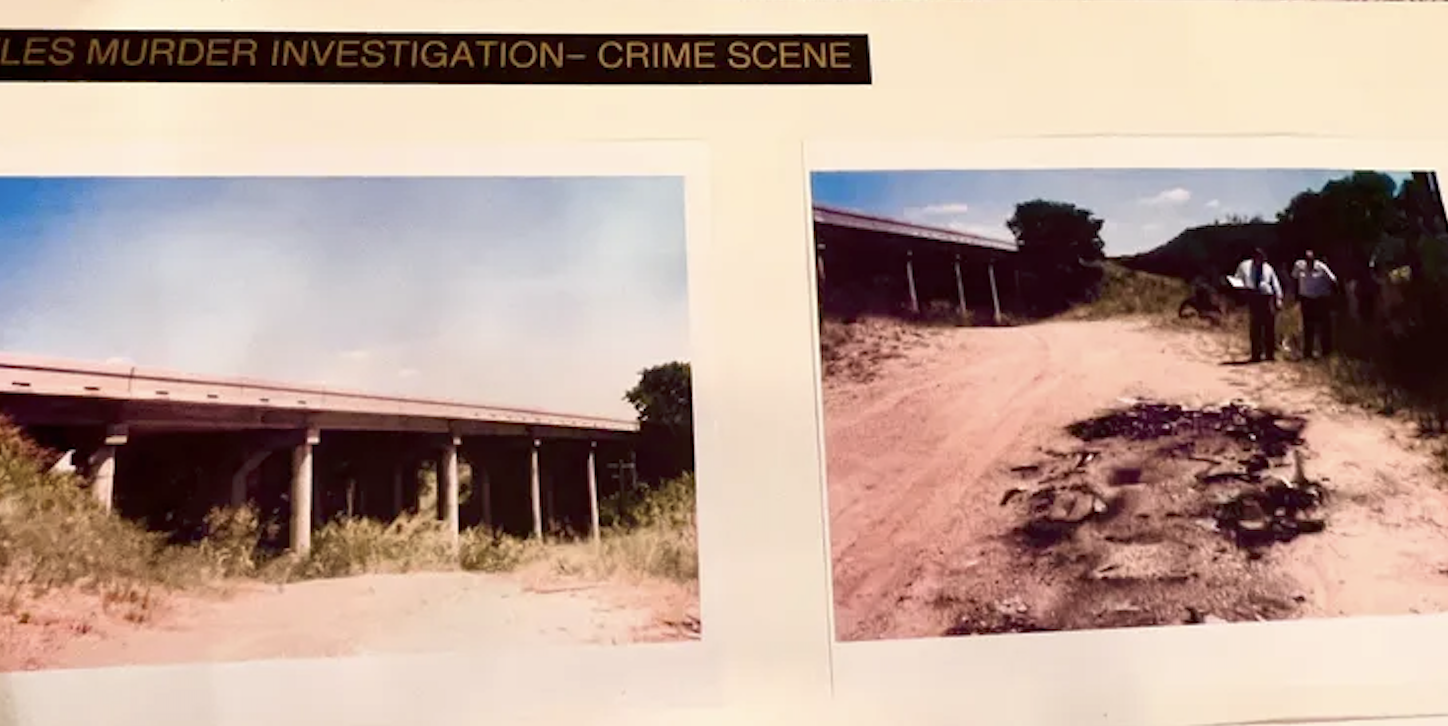
On May 10, 1996, just after 12:20 a.m., a driver traveling along Farm Road 2126 in Brown County, Central Texas called 911. Ahead of them, just off a side road near the entrance to a local gun range, a car was burning. A Ford Thunderbird, engulfed in flames, sitting alone in the dark.
Minutes later, a second 911 call came in.
This caller was a registered nurse, driving home after finishing her shift at the hospital. She saw the fire and did what she was trained to do – she pulled over, thinking someone might need help. As she walked closer, the scene shifted.
A body was lying several feet in front of the burning car. The flames hadn’t reached him, but it was immediately clear there was nothing she could do. He was already gone. The nurse was devastated. She stayed long enough to make the call – to report what she’d found – and then waited as first responders were dispatched to the scene.
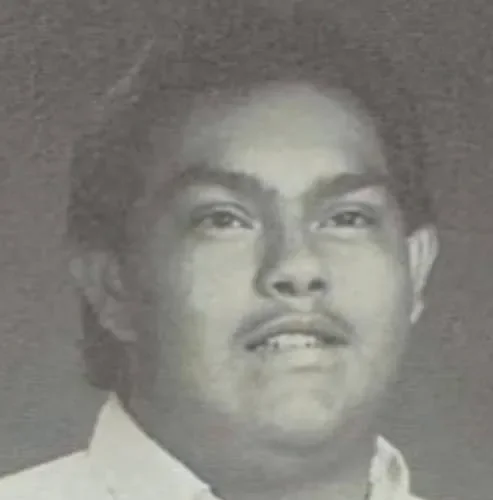
When the fire department and deputies with the Brown County Sheriff’s Office arrived, they found the man lying about 10 feet in front of the vehicle. Once the fire was extinguished, investigators confirmed what the scene already suggested – the victim had been murdered. Shot in the back of the head, execution style.
He was identified as Leon Laureles, a 30-year-old man who lived in nearby Brownwood.
By the time Leon was identified, several people were already looking for him.
CHAPTER 2: The Parking Lot
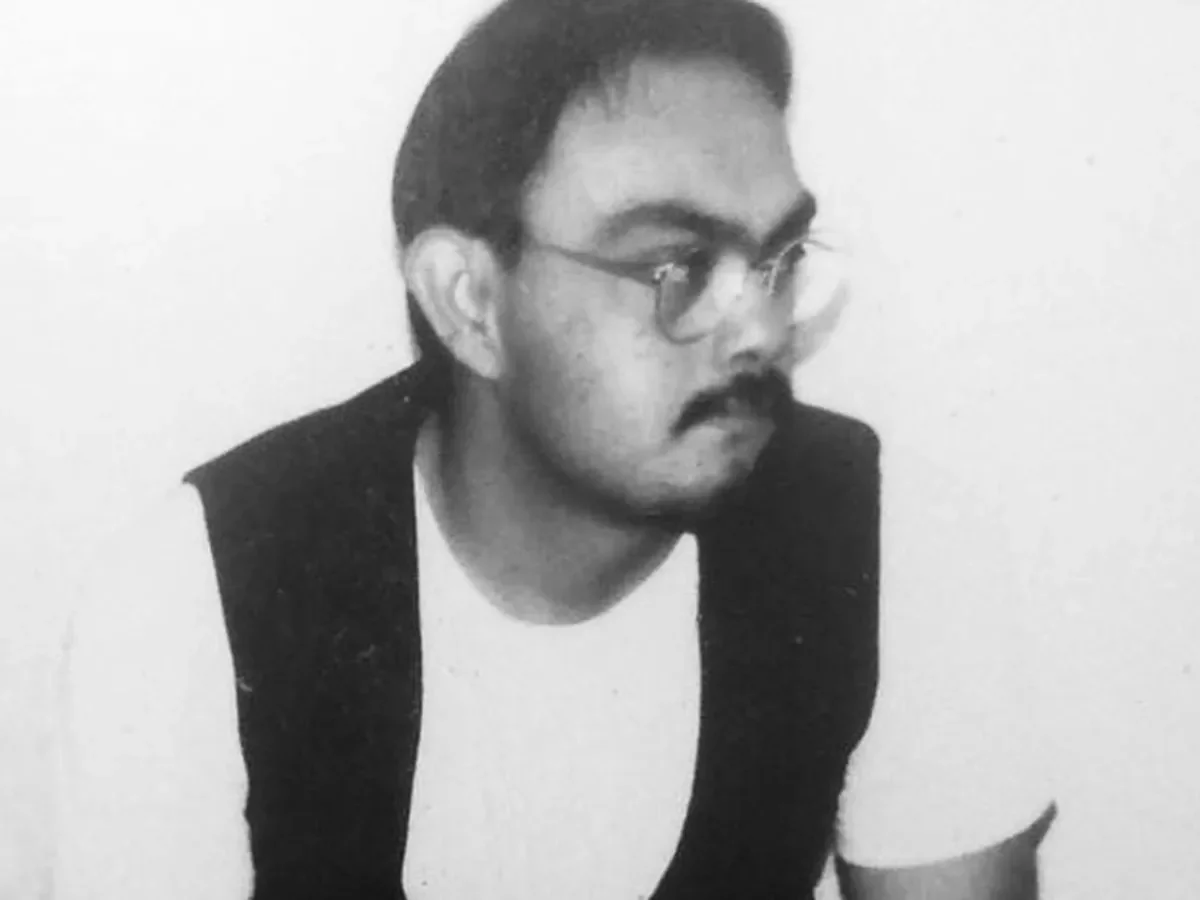
Leon was supposed to be at work. He was scheduled to start his midnight shift at Kroger, a grocery store in Brownwood, and he was known for being punctual – almost ritualistic about it. Leon usually left home at 11:30 p.m. and arrived early, around 11:45, even though his shift didn’t officially start until midnight. He liked having a few quiet minutes before the night began. Time to settle in, talk with coworkers, ease into the shift.
That night, a coworker saw Leon pull into the parking lot through the store window. He parked slightly off from his usual spot because it was already taken, choosing the space next to it instead. She noticed another vehicle nearby, but nothing about it stood out. Nothing felt unusual so she didn’t think much about it.
Believing Leon would be inside at any moment, she went back to work. But when midnight came and Leon hadn’t come in for work, she looked out again. Both cars were gone.
Concerned, she picked up the phone and called Leon’s brother, who Leon lived with. George got in his car and drove Leon’s usual route, scanning the roads, expecting to find him somewhere along the way. He didn’t. After returning home, he called the coworker back to tell her he hadn’t found anything.
While they were still on the phone, a fire truck drove past. It was a small detail – one the coworker would remember vividly later. At the time, it barely registered. There was no reason it would. She had no way of knowing that the truck was heading toward Farm Road 2126 – toward a burning car, toward a crime scene, toward Leon.
CHAPTER 3: The Boy Who Grew Up Fast
Leon Laureles was born on January 3, 1966, in Central Texas. He was the youngest of nine children, with a wide age gap separating him from most of his siblings. The closest in age was still 12 years older. Because of that, Leon often existed on the edge of two worlds — too young to fully fit in with his siblings, but carrying responsibilities far beyond his years.
That gap is part of why Leon formed especially close bonds with his nieces and nephews.None more so than his niece, Arlene, who was just two years younger than him. Their relationship didn’t feel like uncle and niece. It felt like siblings growing up side by side. We had the privilege of working closely with Arlene on this episode, and her connection to Leon is woven through every part of his story.
Leon and Arlene grew up in Brady, Texas, a small town near Brownwood. They lived close enough that Arlene could walk to Leon’s house whenever she wanted – which was often. They spent their childhood together, moving freely between each other’s homes, sharing everyday moments that felt ordinary at the time but later carried enormous weight.
Leon’s childhood, however, was anything but typical.
At just 10 years old, Leon was the only child still living in the family home. His parents were struggling with serious health issues, and Leon stepped into a role most children never should have to fill. He learned how to cook because the household needed it.
And according to Arlene, he wasn’t just capable – he was genuinely good at it. Leon could take whatever ingredients were around and turn them into a real meal, something warm and comforting.Something that made things feel normal, even when nothing was.
As his parents’ health declined, his responsibilities only grew. By the time he reached high school, both of his parents were dealing with life-threatening medical conditions. At 14 years old, Leon got his driver’s permit so he could get them where they needed to go. He managed everything – appointments, medications, long trips to Dallas for treatment. This meant Leon often missed school so he could stay home and take care of his parents. It meant growing up faster than anyone should have to.
Despite the weight of it all, Arlene says she never saw Leon angry. He was never bitter, never resentful. She describes him as deeply caring, devoted, and selfless – someone who instinctively put the needs of others ahead of his own, without complaint.
CHAPTER 4: A Life on Hold
Thankfully, Leon wasn’t carrying that weight alone all the time.. For the last two years of high school, Arlene was there with him. On the days Leon was able to attend class, he would pick her up before school. They weren’t in the same grade, but they shared something important: band.
Leon played the trumpet. Arlene played the saxophone. They traveled to competitions, performed at school events, and shared moments that allowed Leon, briefly, to just be a teenager. Arlene cherished that time. Every minute she got with him felt important, even then.
After high school, Arlene had a son and moved to San Angelo, Texas, where she raised him as a single mother. Within just a few years, Leon’s parents passed away. Leon moved in with Arlene to help raise her son, stepping into yet another caregiving role without hesitation.
A few years later, Arlene welcomed another son. Not long after that, she, her two children, and Leon moved to Brownwood, closer to their hometown. When her third son was born, they settled into a rhythm that worked for everyone. He wasn’t just helping – he became a steady, constant presence in her children’s lives. To her kids, Leon wasn’t just an uncle. He was a father figure. During the day, Leon took care of the boys while Arlene worked. At night, Leon clocked in for his overnight shift at Kroger. It was exhausting – but it worked, and they kept that routine for years.
When Arlene’s children reached school age, Leon moved in with his older brother George and continued working nights at Kroger. For much of his life, Leon had been consumed by responsibility – work, caregiving, survival. It wasn’t until this period that he began to have space for himself. He started socializing, building friendships, experiencing parts of life he’d long been denied.
He was also exploring his sexuality. Leon was gay, but he was not publicly out at the time of his death. According to Arlene, because of how they were raised, Leon never formally came out to his family. He never sat her down or labeled himself. But she always knew – and it never mattered to her. She loved him exactly as he was.
Arlene believes Leon never felt the need to explain himself to her because he was already accepted. She also believes Leon kept that part of his identity private for a reason. In Brown County, Texas in 1996, being openly gay was not widely accepted.
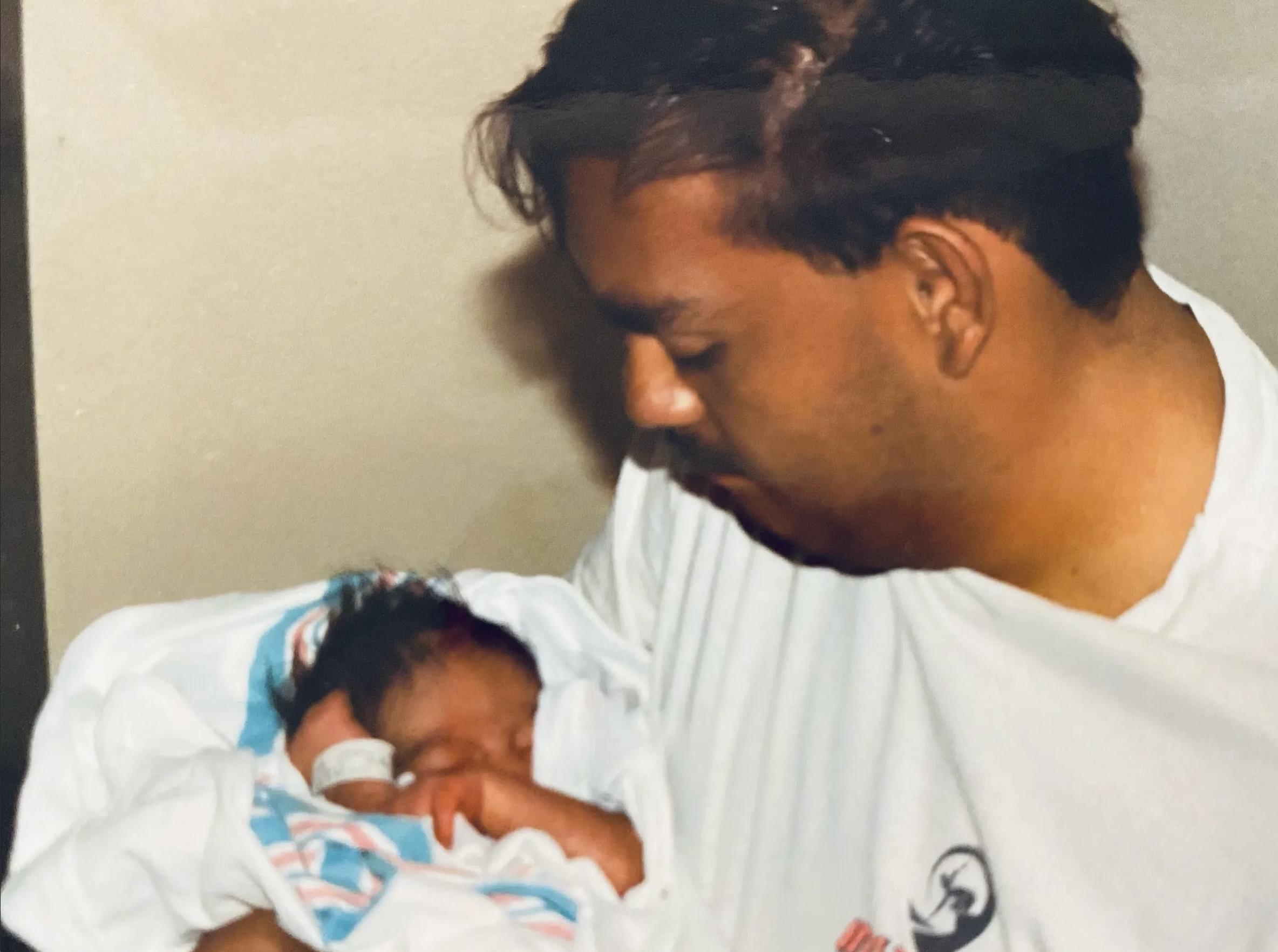
CHAPTER 5: Taken
By the spring of 1996, Leon was finally beginning to live for himself. He was doing things he wanted to do, and exploring a version of life that hadn’t revolved entirely around taking care of someone else.
Arlene was happy for him – genuinely, deeply happy. She had no idea how little time he had left.
In the early morning hours of May 10, Arlene received the call that changed her life forever. Leon had been murdered. She rushed to the police station, desperate for answers. The family was told only that Leon had been found near a gun range, shot execution-style. The family was balancing their surprise with confusion. Nothing about it made sense.
Leon wasn’t known to go to the gun range. It wasn’t somewhere you wandered into or passed through by chance, especially in the middle of the night. The road was dark. Isolated. No nearby homes. No reason to be there at all. Leon didn’t stumble into that place. Someone took him there.
But why?
Leon was gentle and caring. He avoided conflict and spent his life constantly thinking of others. Who would want to hurt him? Arlene couldn’t fathom it.
She told us that losing Leon was the worst thing she has ever experienced. He was her best friend. The person closest to her. The one person in their large family who, in her words, truly loved her for exactly who she was.
When Leon died, she didn’t just lose that. She also lost a part of herself.
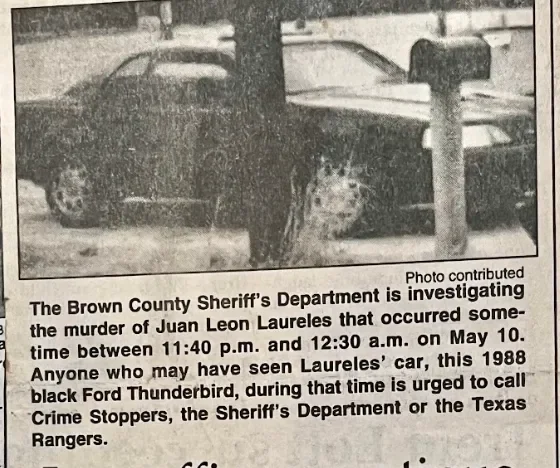
CHAPTER 6: The Narrative
Once deputies confirmed that Leon had been murdered, an investigation was required. But almost immediately, the case took an unusual turn. The Brown County Sheriff recused himself and requested assistance from the Texas Rangers. To this day, Arlene says she has never been given a clear explanation for why that decision was made. Typically, a sheriff will step aside if there is a personal connection to the victim or the circumstances of the case.
According to Arlene, there was no stated connection here. The Sheriff did not know Leon, and there were no known ties to the family. Even so, a Texas Ranger was brought in to take the lead.
Texas Ranger Bobby Grubbs was assigned to the investigation. The first thing he did was go down to the Kroger in Brownwood to interview Leon’s coworkers. He questioned the employee who had raised the initial concern when Leon failed to come inside for his shift. During those interviews, Grubbs began advancing a theory almost immediately – that Leon’s death was drug-related. The implication, as Arlene understood it, was that Leon was killed because he’d been involved in drugs.
Arlene says the employees at the grocery store pushed back. They tried to explain the greater context to the Texas Ranger – Leon’s routine, his character, what they had witnessed that night. But those explanations were dismissed. When Leon’s coworkers attempted to provide context or raise concerns, Arlene said Grubbs walked away – refusing to listen.
When Arlene later heard this theory, it made no sense to her. Leon did not use drugs. Arlene says she saw Leon multiple times a week and believes she would have known if he was using substances. And beyond that – no drugs were found at the scene. To her, the conclusion felt premature, unsupported by evidence, and ultimately convenient.
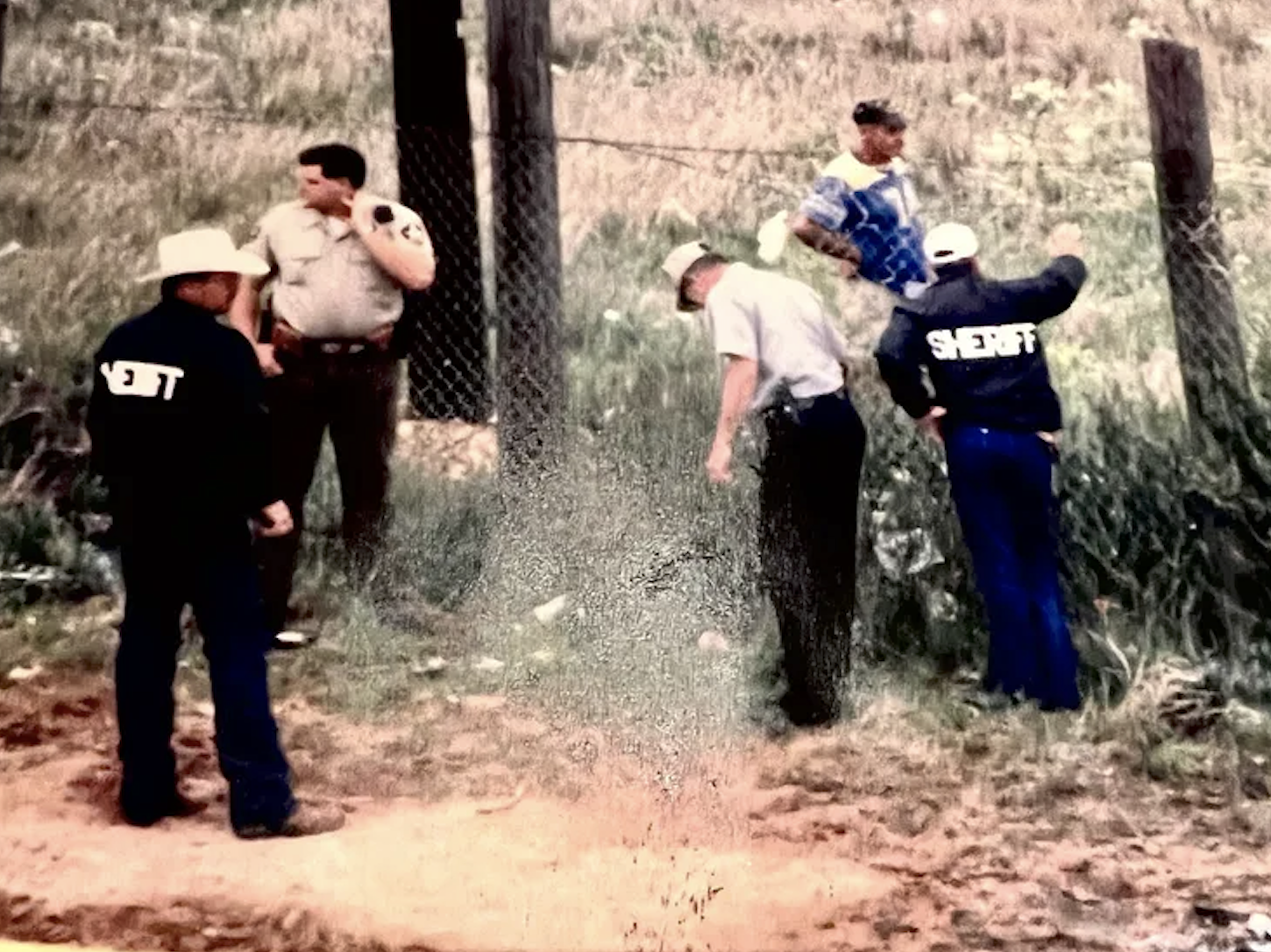
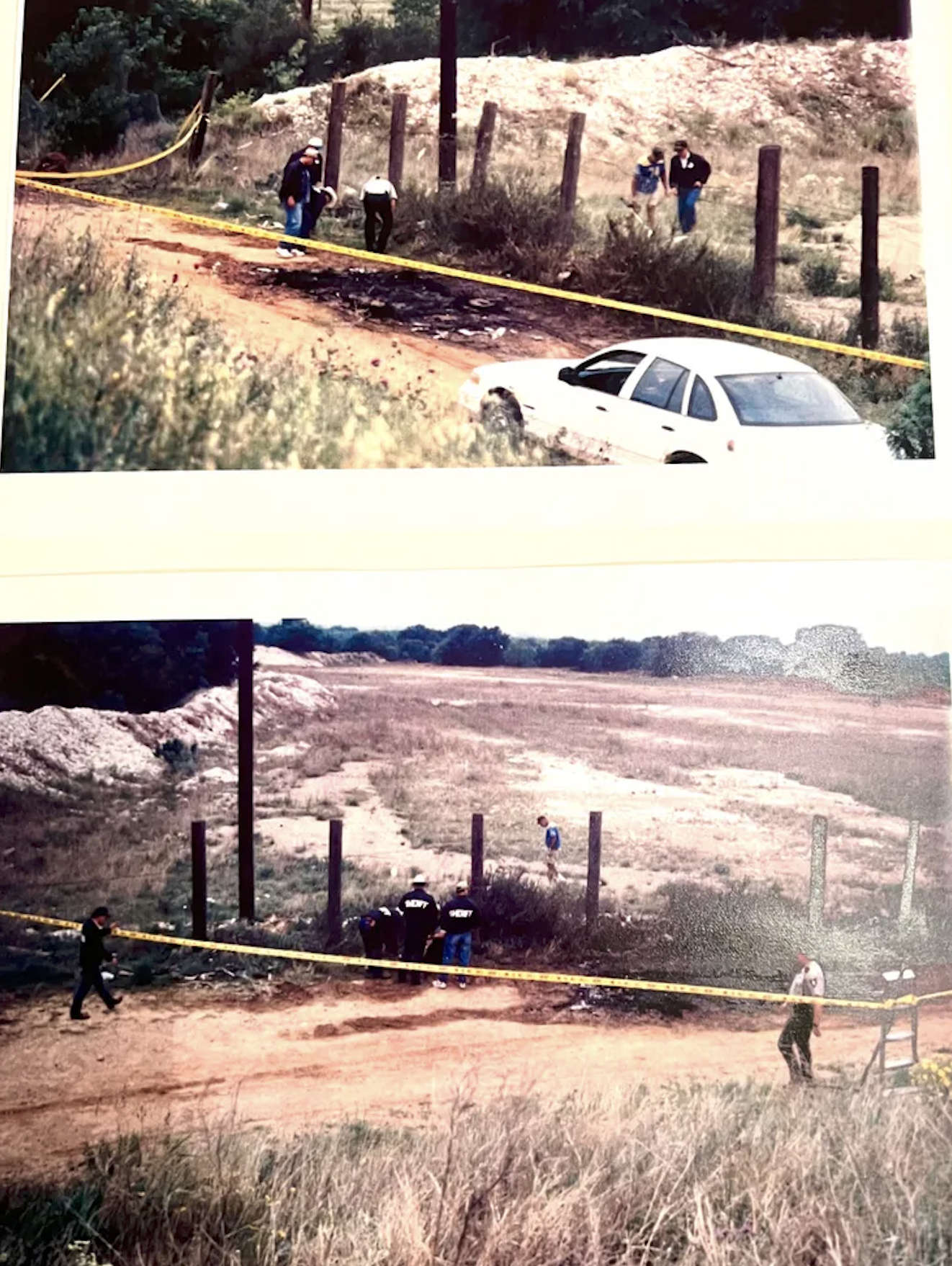
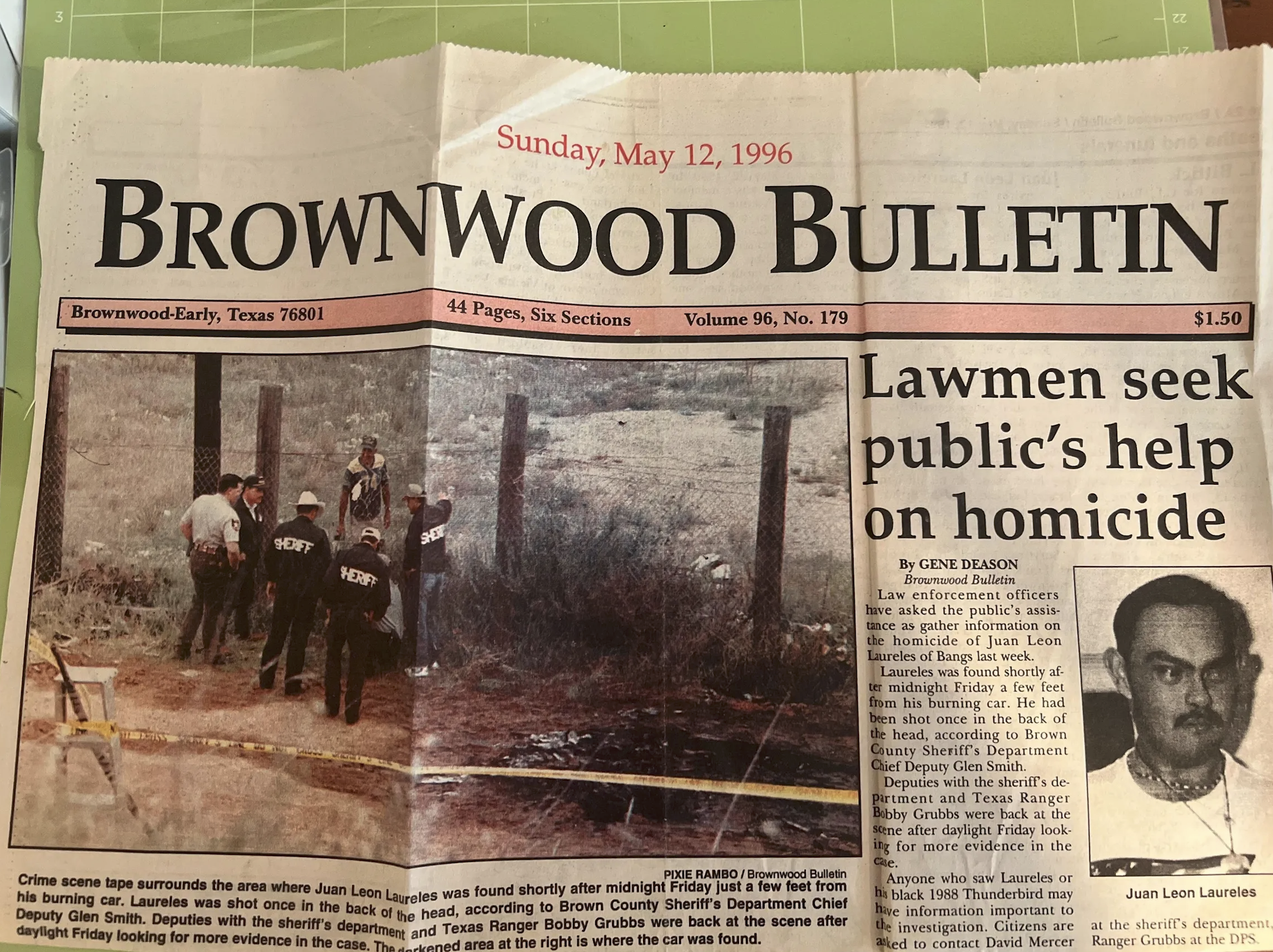
It would only get worse. Later that morning, when there was daylight, deputies worked the scene near the gun range. Members of the media were there too, photographing what was described as an active investigation. Despite having recused himself, the Sheriff was photographed at the scene. He, along with six other investigators, were standing in the exact spot where Leon’s body had been found. None of them appeared to be wearing gloves, booties, or protective gear, despite protocol requirements.
When Arlene saw the photo on the front page of the news, she was outraged. Taken together – the drug theory, the dismissal of witnesses, the contamination of the scene – Arlene could sense that investigators weren’t taking the case seriously.
She knows why. Because Leon was gay. He was Hispanic. And he was poor. Arlene believes those facts shaped how authorities viewed him, and how much effort they were willing to invest in finding who killed him. She feels a decision was made early on – that Leon’s life did not warrant a thorough investigation.
This is one of the hardest things to explain to people who haven’t lived inside a case like this. Because when you hear about a case, you are more than likely hearing the perspective of the investigation and what is on paper. But that storyline is not always based on facts, and can be influenced by biased beliefs.
When police decide on a narrative early – really decide – everything after that starts to bend around it. Evidence isn’t followed wherever it leads. It’s filtered to match their presconstructed timeline. Witnesses aren’t listened to. They’re evaluated based on whether they support that theory. Questions stop being asked – because the answer is already assumed. Once that happens, it’s almost impossible to undo.
I’ve seen it firsthand. When investigators lock into a version of events that feels easy or familiar, they stop looking for the truth, and start looking for confirmation. Anything that complicates the story becomes inconvenient. Anything that challenges it gets dismissed.
What’s especially dangerous is that this often happens to people who are already marginalized. People whose lives don’t fit the image of a “perfect victim.” People who are easy to explain away.
So when I hear that Leon’s coworkers tried to speak up, tried to add context, and were brushed off – that doesn’t surprise me. Once a narrative is chosen, the case doesn’t stay open. It just stays unsolved.
CHAPTER 7: The Truck
The day after Leon’s murder, the Brown County Chief Deputy Sheriff spoke publicly and told reporters that investigators had one lead. A witness driving through the area shortly before the 911 call reported seeing two vehicles moving slowly near the gun range – Leon’s Thunderbird and what appeared to be a flatbed truck, possibly a Ford.
Details about that truck vary depending on the report. It was described as having tinted windows, chrome mirrors, and a gooseneck trailer ball mounted in the bed. But the color description was inconsistent – some reports listed it as white, others red, and some said it appeared to be both.
Beyond that, investigators said they had no additional leads. No motive. No suspects.
In an effort to generate tips, Leon’s family, Kroger, and Crime Stoppers each offered a $1,000 reward. Even with that incentive, nothing came in that moved the case forward. Leon’s murder remained unsolved.
According to Arlene, the investigation technically continued – but she never saw that meaningful investigative work was actually being done to solve the case.
She points out that investigators did not interview most of Leon’s family. Aside from speaking with his brother George, no one else was questioned. Arlene says she was never interviewed. She was the person closest to Leon – his best friend, his confidant – and no one ever asked her what she knew.
Aside from that, investigators claimed they were unable to collect any usable evidence from the scene. They said everything inside Leon’s car had been destroyed - first by the fire, then by the water used to put it out.
By this point, the case wasn’t stalled because of a lack of possibilities. It was stalled because of a lack of curiosity. Those missing interviews, the vague vehicle description, a crime scene that was treated like it had nothing left to offer are symptoms of a greater problem. For Arlene, it confirmed something she already feared. Leon’s case wasn’t moving slowly. It was being allowed to fade.
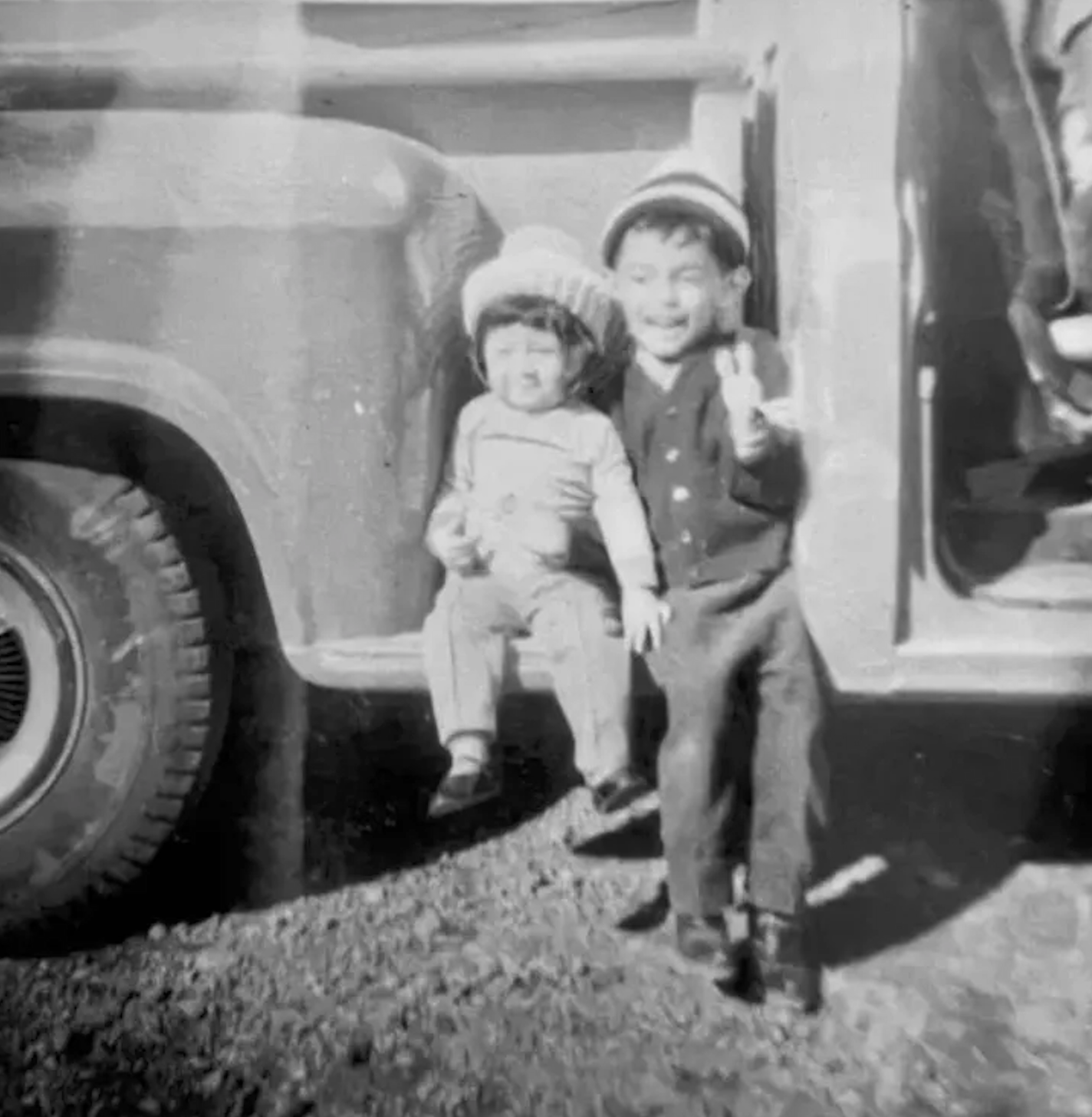
CHAPTER 8: Two Pieces of Paper
About two weeks after Leon was killed, George met with Texas Ranger Bobby Grubbs to ask for an update. George wanted to know what had been done, if anything had been found. It’s pretty common for family members to feel the urge to check in on where things stand throughout an investigation.
According to George, Grubbs pulled out two very small pieces of paper – similar to Post-it notes – and indicated that was the entirety of the case file. Those notes, he said, represented the full scope of the investigation. Grubbs explained that he did not use computers, so nothing else existed. Officials had no reports, no transcripts, no documented follow-ups – just two small pieces of paper.
George left that meeting and drove straight to Arlene’s house. She remembers him saying, “We’ve got to hire somebody else. Leon’s case is not being investigated at all.” So Arlene and George pooled their savings together and hired a private investigator. They brought in William Dear, someone they believed was experienced and well respected. He came to Brownwood and worked the case for just over a week.
But then he told the family something that stopped everyone in their tracks. According to Arlene, Dear told the family that he believed the town was deeply corrupt. He told them he had been threatened multiple times while investigating Leon’s murder. Because of those threats, he ultimately decided not to continue working the case.
For the next two years, Arlene and George continued pushing for answers. They contacted the police. They asked questions. They followed up. They refused to let Leon’s case disappear quietly. It was exhausting and incredibly painful.
Despite everything Arlene and George did – despite their persistence, their sacrifice, and their refusal to let Leon be forgotten – nothing changed. There was no movement in the case. There was no renewed interest from law enforcement. There were no answers.
After two years, Arlene left Brownwood. She couldn’t bear to stay any longer. For years after that, there were no updates at all.
CHAPTER 9: One Page
Eventually, Arlene made the decision to start advocating publicly for Leon’s case – even though it was painful. She hoped that with enough time passed, she might finally find help within the Brown County Sheriff’s Office. Instead, she ran into the same barriers – over and over again.
According to Arlene, there had been no meaningful change inside the department. The same people who worked there in 1996 were still there years later. She believes that continuity has allowed information to remain protected – and what she describes as long-held secrets – to stay buried.
Deputies and officials have refused to speak with her. Requests for information have gone unanswered. And despite repeated efforts, she has never seen Leon’s case files.
For years, Arlene focused on trying to obtain just one document: Leon’s autopsy report. She filed records requests. She contacted the medical examiner’s office. Each time, she was told the same thing: that a judge is the sole gatekeeper of the record.
Arlene says she tried repeatedly to speak with him. At first, he told her he had never heard of Leon’s case. Later, he claimed the files had been damaged in a flood. Arlene researched that explanation and found no record of a flood that destroyed courthouse records. When she confronted him about the discrepancy, communication stopped altogether.
Then, in 2024, nearly 28 years after Leon was killed, Arlene finally received something. One single page. It was a portion of Leon’s autopsy report. The page included toxicology results and basic measurements, like organ weights. The page also stated that the bullet was lodged in Leon’s thumb. To Arlene, that detail suggested Leon had his hands raised in front of his face when he was shot.
According to Arlene, investigators did recover the bullet. It was placed in a bag and handed to a deputy. That deputy reportedly put it in the sheriff’s desk. The bullet has since been lost. There is no other evidence in the case.
The way Arlene has been treated by authorities makes her feel like she’s being victimized all over again. Leon was a beautiful person. He deserves to be remembered. He deserves justice. Instead, nearly three decades later, Arlene is still left with the same feeling she had in 1996 – that no one cares what happened to him.
This part of the story is where grief turns into something else.
Losing someone to violence is devastating on its own – but being shut out afterward, stonewalled, ignored, or lied to by the very systems that are supposed to help you? That’s a second trauma.
When families are forced to beg for basic information about their own loved ones – when they have to fight for decades just to see a single page of a report – that tells you something is broken. But what makes it worse is how often this happens quietly.
Not every family gets the press conference or the accountability. Just delays, deflections, and excuses until families are too tired to keep pushing. I’ve learned that when authorities say “there’s nothing more we can do,” what they often mean is “we’ve decided not to.”
And when you’re on the other side of that – when you’re the person asking questions that no one wants to answer – it doesn’t feel like justice being delayed, it feels like justice being denied.
CHAPTER 10: Fifteen Minutes
Even without cooperation from law enforcement, Arlene has continued investigating Leon’s case on her own. Over the years, she’s gathered information piece by piece – details that, when laid out together, have helped her form a theory about what may have happened to Leon that night.
Arlene believes Leon was taken to the area near a gun range along FM Road 2126. The location is roughly 10 miles from the Kroger parking lot where Leon was last seen – a drive she estimates would take about 10 minutes.
Based on what she’s learned, Arlene does not believe Leon could have been taken there by a single person. She thinks more than one individual had to be involved. One person would have needed to control Leon — either riding with him as he drove, or driving Leon’s Thunderbird themselves — while another person followed behind in the pickup truck witnesses later described.
No matter the specifics of the scenario, Leon was taken from the Kroger parking lot and driven to the location against his will. She estimates the total travel time – including leaving the parking lot and reaching the gun range area – would have been around 15 minutes. Leon’s shift was scheduled to begin at midnight. The first 911 call came in around 12:20 a.m.
That window of time is crucial in this case. It’s enough time to take Leon from the parking lot, drive him to the access road, and kill him – especially if the people involved had already planned it and this was done deliberately.
This part of Leon’s story hits close to home for me. I know, firsthand, how quickly a life can be taken – how little time it actually takes for everything to change.
In my dad’s case, there were just a few minutes unaccounted for that left the rest of the case a total mystery. And it all led up to a single moment – where something went wrong, where someone made a decision, and suddenly there was no undoing it. No pause. No second chance. I think people imagine these crimes as chaotic or drawn out – like there would be warning signs, or a time where someone could intervene. But that’s not how it usually happens. Sometimes it’s fast, controlled, planned… and over before anyone realizes something is happening.
So when I hear Arlene lay out that timeline – fifteen minutes, maybe less – I don’t question it. Because I know how quickly a routine night can turn into a crime scene. Once that moment passes, what happens next matters just as much.
It determines whether investigators stay curious, whether they listen, whether they care enough to keep asking questions. When they don’t, families are left fighting for the truth alone.
CHAPTER 11: The Three Names
During her investigation, Arlene learned that the private investigator she and George hired in 1996 had shared one critical detail with George before leaving town – a list of three suspects.
Two of the suspects were brothers. The third was a friend of theirs. According to Arlene, the three men were associated with a group that referred to itself as the “North Side Posse.”
Arlene says she’s been told members of this group were involved in theft and drug activity, and that they performed what she describes as “dirty work” for local law enforcement.
The men were also known to regularly steal merchandise from the Kroger Leon worked at. Eventually, Leon stood up to them. He told the group he would no longer allow the thefts to continue – and that if it happened again, he would call the police. That made them angry with Leon. Not long after, Leon told coworkers that he had been threatened and that he was scared. Leon also told his sister shortly before his death that the two brothers were after him, though he didn’t understand why.
When Arlene learned about this group, she looked into them further. She learned that one of the brothers was known to be openly racist and homophobic. Given that Leon was Hispanic and gay, Arlene believes this man would have harbored animosity toward him.
So she kept digging. Arlene heard from multiple people that the brothers were connected to a truck consistent with the description of the vehicle seen alongside Leon’s Thunderbird off the access road. That truck disappeared after Leon was killed.
Arlene also learned of an incident that occurred shortly after Leon’s death. She was told the three men were present at a party in Brown County, where the friend of the brothers was overheard telling several people that he had killed Leon, claiming it was because Leon was trying to date his younger brother.
Arlene says multiple people went to police to report hearing the confession. They were told it would be looked into. But there was never any follow-up. None of the three men were arrested.
What troubles Arlene even more is that the men she believes are responsible for Leon’s murder have continued to cause problems in town without consequence. Nothing ever happens to them. For example, in 2024, one of the brothers was arrested on three unrelated charges. Those charges were later dropped.
It’s not easy to describe what it’s like to live with this – to carry not just the loss of someone you love, but the knowledge that there were moments where this case could have moved forward… and didn’t.
For Arlene, this isn’t just about unanswered questions. It’s about watching the same people continue their lives, and continue causing harm, while the person who mattered most to her never got a chance to keep living his. It’s exhausting in a way that’s hard to describe – to spend decades doing the work that investigators should have done, to hear the same names, the same stories, the same excuses. And to be told, again and again, that nothing can be done.
What makes it even harder is that Arlene hasn’t asked for anything unreasonable. She’s asked for transparency, accountability, and for someone – anyone – to take Leon’s life seriously. Instead, she’s been forced to carry the weight of this case alone and the frustration she feels isn’t loud or dramatic.
This kind of weight is quiet, burdensome, and never really goes away..
CHAPTER 12: The Other Layer
Arlene believes there may be another layer to this case – one involving the Sheriff who recused himself and his son. She wants to be very clear about what’s about to be shared.
This is her belief – shaped by what she has been told over the years – not something she can confirm.
According to Arlene, she was told that Leon and the Sheriff’s son may have been involved romantically around the time of Leon’s murder. Multiple people said that the Sheriff’s son went to the Kroger at around 4:00 am, just hours after Leon was killed. Witnesses said he was frantic and asking for Leon. He had never done anything like that before, so it really stood out.
Arlene said she has wondered ever since whether he may have gone there to warn Leon – or to check if he was safe. Either way, the timing seems important.
Arlene does not believe the Sheriff’s son was involved in Leon’s murder. From everything she’s heard, she really thinks the son genuinely cared about Leon. She does wonder, though, if the Sheriff may have been connected in some way. At the time, homophobia was rampant in Brown County, and most, if not all officials, would not have accepted their sons coming out as gay. If the Sheriff’s son was seeing Leon, that relationship could’ve created serious conflict.
To Arlene, the possibility helps explain several things that never made sense to her – why the Sheriff recused himself immediately, why Leon’s murder was never thoroughly investigated, and why the family has been denied access to information for decades.
This is not something Arlene can confirm – it’s a theory shaped by what she’s been told, questions that have never been answered, and inductive reasoning.
This part of Leon’s story is painfully familiar to me. In my dad’s case, I watched something similar happen – where relationships and local power mattered more than justice. Where connections shaped what questions were asked… and which ones were quietly avoided.
When law enforcement is too close to the people involved – or too invested in protecting their own – investigations don’t just slow down. They narrow completely. Detectives become careful in all the wrong ways. They start to cut corners and brush leads under the rug. What families are left with is this impossible feeling – that the truth isn’t gone, it’s just being actively avoided. That’s why cases like Leon’s don’t feel unresolved by accident. They feel unresolved by design.
And when you’ve lived through that – when you’ve watched a system close ranks instead of open files – you stop believing that time alone will bring justice. Justice only comes when people are willing to look honestly at what went wrong. Too often, that’s the one thing no one wants to do.
CHAPTER 13: Still Fighting
Despite everything she’s faced, Arlene continues to investigate and advocate for Leon’s case. But with each new piece of information, she’s left wondering where to turn next. She cannot go to the Sheriff’s department – they refuse to speak with her. There is no clear path forward. No agency is willing to help. The weight of it is overwhelming.
Still, Arlene refuses to stop. She can’t give up – not on the person who meant the world to her.
Leon never had the chance to fall in love openly. He never got to marry. He never had children. Arlene says that loss is what breaks her heart the most. If anyone deserved those parts of life, it was Leon.
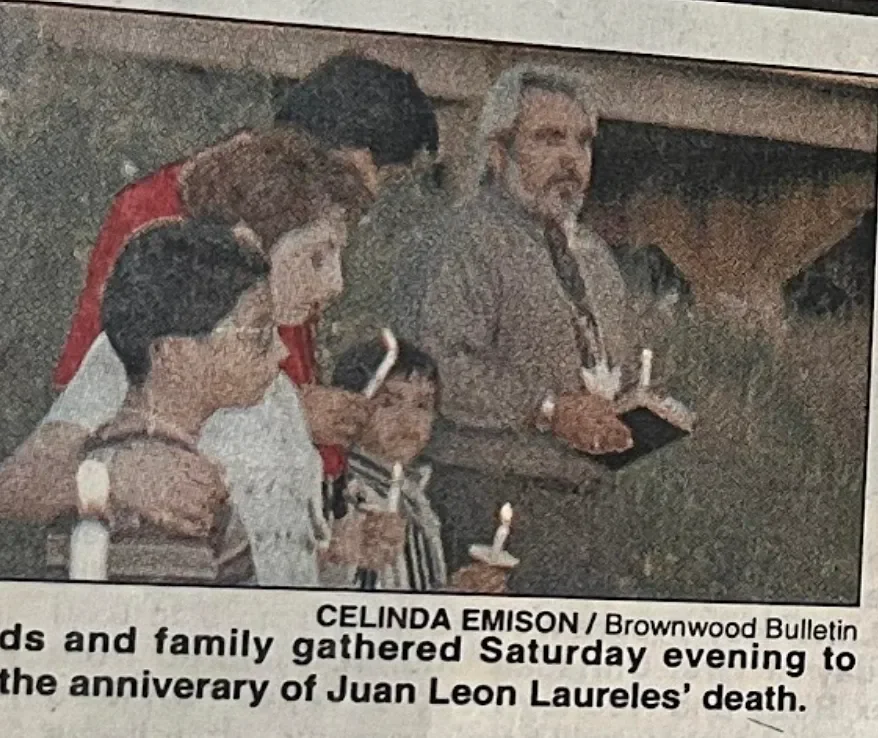
But someone took that away from him and from the people who loved him. Because of that, Arlene says will fight until her final breath to make sure his killers are held accountable. She wants to make sure the public knows about the lack of investigation into his murder, and ensure that Leon is never forgotten.
If you have information in Leon’s case, please email justicetipsforleon@gmail.com.
CHAPTER 14: Say His Name
Leon Laureles was 30 years old when his life was taken on a dark stretch of road outside Brownwood, Texas. He was a son, a brother, an uncle, a caregiver, and a best friend. Leon was a human being who spent most of his life taking care of other people, often at his own expense.
Leon’s murder was a tragedy – and the lack of investigation that followed compounded that loss. Years have passed, but the questions surrounding his death remain unanswered. For Arlene, this isn’t just about solving her beloved uncle’s case. It’s about being heard. It’s about acknowledgement. It’s about refusing to let Leon’s name disappear.
Cases like Leon’s don’t go cold because families stop caring – that’s quite literally the opposite of the reality. They go cold because the people with power to do anything stop looking for answers.
Leon deserved more than that, and so does his family. If his story stays with you, don’t let it end here. Share it. Talk about it. Remember the name Leon Laureles. Because remembrance is not passive – it is how stories endure and cases get solved.
CREDITS:
Thanks for listening to Frozen Files a Yes! Podcast
To help this show reach a wider audience and help these victims and their families gain more attention on their cases, please follow, subscribe, rate, and review wherever you are listening. Your curiosity could crack the case.
Thanks for listening to Frozen Files a Yes! Podcast
Recorded in Los Angeles at KeyFrame Studios
This episode was produced, written, hosted, and edited by Madison McGhee
Produced by Nick Baudille
Produced, written, and researched by Haley Gray
Production design by Stephen Hauser
Creative direction by AJ Christianson
All additional sources are linked in the show notes.
SOURCES:
https://ktxs.com/news/local/police-looking-for-new-leads-in-brown-county-cold-case-murder
Gene Deason, “Lawmen Seek Help. . .” Brownwood Bulletin, 1996.
N/A, “Brown County Man Found Dead Near Burning Vehicle” Fort Worth Star-Telegram, 1996.
https://www.newspapers.com/image/788740838/?terms=leon%20laureles&match=1
Celinda Emison, “Solving Homicides; Abilene beating national average; Investigators clear 80% of killings in city” Abilene Reporter-News, 2010.
Celinda Emison, “Brown County Authorities Find Leads in ‘96 Killing” Abilene Reporter-News, 2008.
Steve Nash, “Investigators Focusing On 1996 Murder” Brownwood Bulletin, 2008.
Steve Nash, “Sheriff’s Candidates Address Numerous Topics at Forum” Abilene Reporter-News, 2016.