AMBER ARNETT
COLD OPEN
It’s a summer afternoon in Lansing, Michigan. The kind of day that passes without much notice. Somewhere in the city, a 39-year-old woman is going about her routine.
She stops at a dollar store along South Martin Luther King Jr. Boulevard. It’s the kind of quick errand people make every day – grabbing a few food items, paying at the register, and heading back out the door. Security cameras capture her moving through the store, standing in line, and making her purchase.
Just another small moment in the middle of a normal day. Afterward, she leaves with a friend.
Later that evening, she sends a message saying she’s outside a gate and needs to be let in.
Then the communication stops. No more messages. No more confirmed sightings. No clear explanation for what happened next.
In the days that follow, her family begins to realize something is wrong.
Calls go unanswered. Messages sit unopened. The normal rhythm of contact suddenly disappears.
And in the years that follow, the hours surrounding that summer day will be studied closely, revisited again and again, with the hope that somewhere in the details, the truth will surface.
This is the story of what happened to Amber Arnett.
I’m Madison McGhee, and this is Frozen Files.

CHAPTER 1: No Place Left to Go
By late June of 2023, Amber Arnett was going through a difficult period in her life – something most people experience at one point or another.
She was 39 years old, and in the months leading up to her disappearance, she had been bouncing from place to place, couch surfing and trying to get by. The job she once had running an adult foster care home was gone, and with it, the housing that came along with the position.
Even within that instability, there were still patterns in Amber’s life. There were people she turned to when things started to unravel. And most importantly, there was one place Amber understood as safe – her mother’s home.
On June 23, 2023, Amber sent her mom, Marty, a message asking if she could come stay for a couple of days because it was not safe for her to remain where she was. She didn’t explain exactly what had happened or who she was afraid of. She simply made it clear that she needed to leave the situation she was in.
At the time, Marty was out of town with family. She told Amber she would be back late the following day, June 24. Around that same time, Amber also reached out to her brother and his wife to ask if she could come over, but they were away as well. In fact, the family happened to be on a trip together, which meant the people Amber would normally rely on were unavailable all at once.
That left Amber in a vulnerable position.
Her aunt would later explain that by this point in Amber’s life, she had burned a lot of bridges, which made reaching out for help more complicated than it might have been otherwise. Messages like this were not necessarily unusual when things were falling apart for her, so at first her family was not immediately alarmed in the way they might have been under different circumstances.
That is one of the harder realities in cases like this. Sometimes the warning signs exist, but they blend into the background of everyday life. When someone has experienced repeated instability, the people around them can become used to sorting through which emergencies will pass and which ones might signal something more serious. Sometimes, by the time everyone realizes that this time was different, the moment when something could have been stopped has already slipped away.

CHAPTER 2: Silence Sets In
By Sunday, June 25, Marty expected Amber to arrive at her house. But Amber never showed up.
At first, no one assumed the worst. Amber was an adult, and given the instability she had been dealing with, it was not unusual for her plans to change at the last minute. Her family figured she had simply found somewhere else to stay for the time being.
A few days passed, and then about a week later Marty decided to check in. She sent Amber a message on Facebook – the way they usually communicated – but there was no response. Amber’s niece, who she was very close with, also tried messaging her on Snapchat. The message was never opened. All of this was unusual, and it started to worry the people closest to her.
Marty began reaching out to people who knew Amber – friends, acquaintances, anyone who might have seen her recently. No one had heard from her since June 25.
Marty started calling local hospitals. She even contacted morgues, hoping someone might have information about where Amber was.
Still, no one had any answers.
By the time the Fourth of July arrived, nearly two weeks had gone by without a single confirmed sighting or message from Amber. Marty told us, “I remember sitting at my neighbor's house thinking, this just isn't right. There's something wrong.”
That was when she decided to call the police and report Amber missing.
Even then, getting help was difficult. Marty said it took six phone calls and nearly two and a half weeks before Lansing police sent an officer to take a missing persons report. By that point, Amber had already been gone for close to a month. The last places she had been, the people she had spent time with, and whatever had made her feel unsafe in the first place were already growing harder to trace.
In the time it took just to file the report, the trail of Amber’s last movements was already beginning to grow colder. And somewhere inside those lost days is the answer to what happened to Amber Arnett.

CHAPTER 3: What She Carried
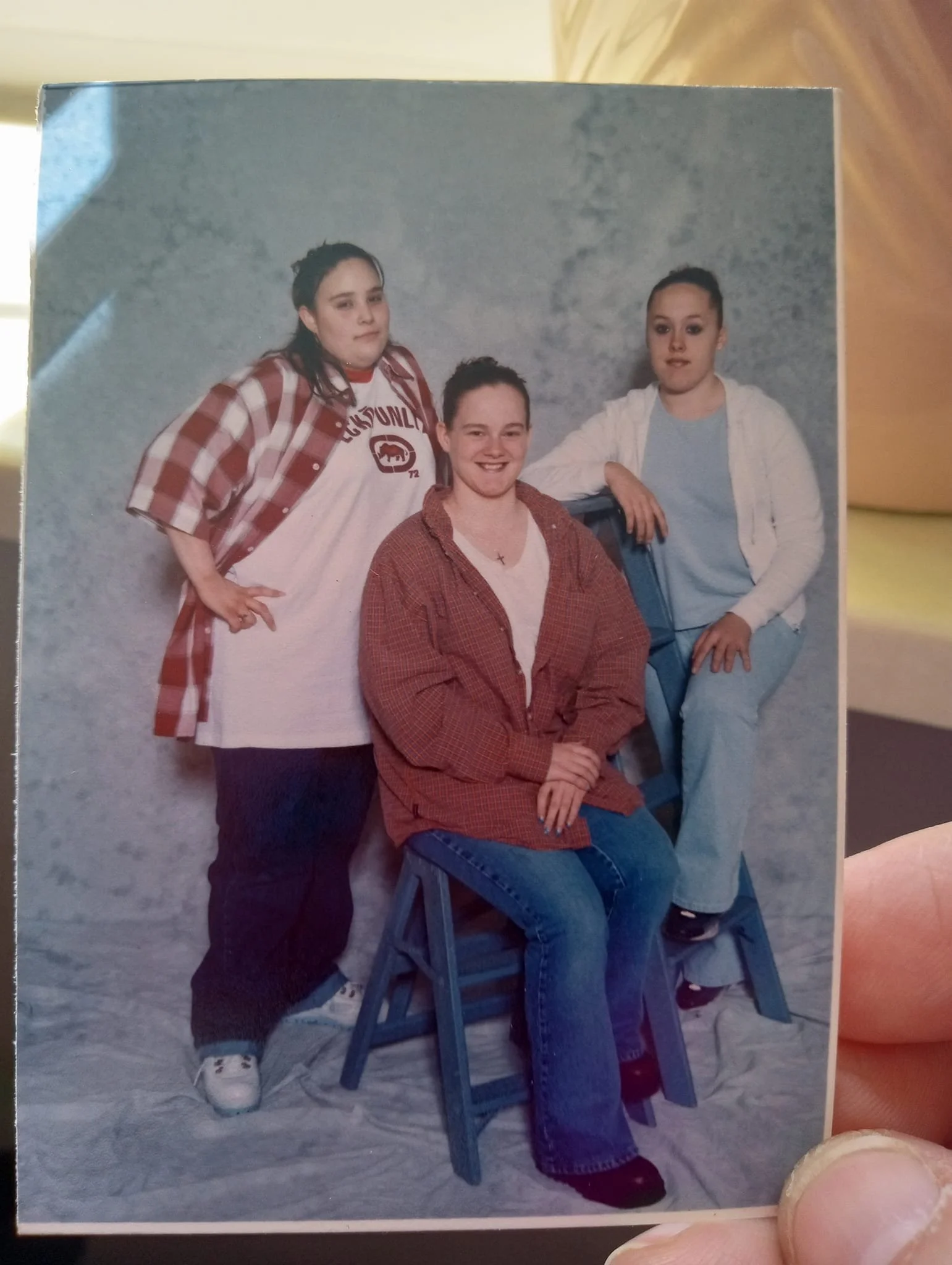
Amber Arnett was born on January 5, 1984, in Lansing, Michigan, and she spent most of her life there. PHOTO: LANSING Lansing was home, not just because that was where she was born, but because it was where her family was, where people knew her, and where so many of the people who loved her had watched her grow up.
Her mother, Marty, had Amber when she was young, but Amber was a welcome addition from the very beginning. She was the first grandchild in the family, and she was adored.
Amber also had a younger brother, about a year and a half younger than her, and because Marty was a single mother who often worked multiple jobs while going to school, the two of them spent a lot of time surrounded by grandparents, cousins, and extended family. It created the kind of upbringing where cousins felt like siblings, and many of those relationships stayed with Amber into adulthood.
But even in a family that loved her deeply, Amber experienced trauma at a very young age that would shape much of what came later. When she was about 6 years old, during the time her parents were divorcing, Amber disclosed that her father had been sexually abusing her. Marty contacted authorities, and Amber’s father was arrested and ultimately convicted.
Marty told us that the fallout from that disclosure fractured Amber’s relationship with her paternal grandparents, who cut her off. Marty said that side of the family had hidden a larger history of sexual abuse, and Amber speaking up forced something into the open that other people had spent years trying to keep buried. Instead of acknowledging what had happened, they blamed Amber for her father’s prison sentence. Marty said the abuse Amber faced, along with his family’s reaction, left her carrying more than any child should ever have to.
Growing up, Amber still looked like a pretty typical kid from the outside. She liked music, had a lot of friends, got good grades, and played in the school band. Marty shared with us that Amber also loved to talk – so much so that Marty would jokingly ask her, “Where’s the mute button?”
Marty said Amber was also wild, but in a great way. She said with a laugh, “Amber was like that from the beginning. I mean, when she was two years old, her favorite song was ‘Rebel Yell’ from Billy Idol. I should have known then I was going to have my hands full.”
That energy was part of Amber’s charm. She had a colorful spirit and a quirky sense of humor, and people remembered how easy it was to laugh around her.
Her family and friends also described her as deeply loyal. If Amber loved you, she showed up for you. Marty told us, “She's very giving, almost to a fault. If somebody needs something and she's got it, she'd give it to you. No questions asked.” It wasn’t uncommon for her to bring someone home who needed food or a warm place to sleep.
Those traits stayed constant in Amber’s life. She was a caregiver, through and through.

CHAPTER 4: The Pattern and the Break
As Amber got older, the trauma she carried began to surface in more destructive ways. By her late teens and early twenties, her family says she was drinking heavily as a way to numb the pain of what had happened to her as a child. Marty explained that Amber could go days or even weeks without alcohol, but once she started drinking, it was often hard for her to stop. Sometimes it wouldn’t end until she passed out or became too sick to continue.
Amber's family says alcohol changed her. The same woman who was kind and caring when sober could become volatile when she was drinking, getting into fights and trouble with police.
Her relationships during those years were often unstable too. Her family says Amber was drawn to men who treated her poorly, and one long-term relationship was so abusive that they believe it nearly killed her. It was a pattern they saw again and again – Amber loving deeply, staying loyal, but often giving that loyalty to people who did not deserve it.
And then, for a while, things seemed to change.
About 6 years before Amber disappeared, her family says she stopped drinking completely. Marty believed something happened that scared her enough to make her quit, and for a period of time Amber truly did get her life back on track. She was sober. She got a good job. She was taking better care of her health. She was stable in a way her family had hoped to see for years.
Amber began working as a caregiver and eventually started running an adult foster care home. It was the kind of work that naturally suited her. She loved caring for vulnerable people, especially the elderly, and her family says she was genuinely good at it.
Everyone in Amber’s life was incredibly proud of what she’d done to improve her life.
But then in 2020, something happened that shifted things again. Amber’s father, who had been released from prison, was murdered while living in an unhoused encampment. Even after what he had done to her, Amber had still tried to have some form of relationship with him and often felt guilty for the way his life had turned out. His death really affected her.
In the months that followed, her family began to notice changes. Amber started pulling away from some of the people closest to her and began spending time with a rougher crowd.

CHAPTER 5: Who She Let Back In
Then came Mike Rogers, a recently paroled felon Amber had known before he went to prison. Her family isn’t completely sure what their relationship had been – whether they had dated or were simply close. But they do know one thing: before Mike went to prison on drug charges, Amber had been afraid of him.
In the fall of 2022, Mike was released from prison, and not long after, he re-entered Amber’s life. According to her family, that situation quickly spiraled. They say Mike began selling methamphetamine out of the home.
Authorities found out about the drugs and in September of 2022, Michigan State Police and the U.S. Marshals surrounded the home to arrest Mike for violating parole and for the sale of methamphetamine.
When law enforcement entered the home, Mike was not there. Instead, investigators found a large amount of marijuana and methamphetamine inside. Police asked Amber for help locating Mike, but according to her family, she refused. She said Mike had saved her life once and she could not turn on him.
That decision had serious consequences. Amber was charged with possession of a controlled substance. She was arrested, then released on her own recognizance, which is a type of bail. Mike was also arrested, but he was denied bond.
Marty said the family was devastated watching everything unfold, but it also followed a pattern they had seen before. Amber had a history of standing by men who treated her badly, even when those relationships were clearly hurting her. And once again, her loyalty had cost her dearly.
There were unfortunately more consequences waiting for Amber. In January 2023, the foster care home was shut down and by February, Amber was evicted from the property. Almost overnight, she lost both her job and her housing.
Marty shared with us that period of Amber’s life was really hard for her to watch. She wanted to save her daughter, but because of past experiences, she also had to set boundaries. She would allow Amber to come by for a shower or a meal, but Amber could not live there. So, she bounced between friends’ houses, couch surfing wherever she could find a play to stay.
CHAPTER 6: Ready to Start Over
No matter where she was staying, Amber remained in contact with her family through phone calls and Facebook messages. She also saw Marty every couple of weeks when she needed to pick up her mail, take a shower, or regroup for a little while.
Watching Amber go through this period in her life was difficult for her family, especially because they had seen her stable before. They knew what she was capable of. They knew this chapter of her life did not define who she was.
According to Marty, in the months before her disappearance, Amber had started talking again about wanting to do better. She was tired of the way she had been living. She had a lawyer for her upcoming criminal case, scheduled for July 2023, and Marty believed Amber was ready to face whatever consequences were coming so she could move forward.
Marty told us, “She did tell me in one of our last conversations, ‘Mom, I'm just ready to do my time and get this over with. I want to start over’. So I think she had hit bottom and she was ready to start climbing back up.”
Her family was proud of her, and couldn’t wait to see her comeback. They believed this was the type of rock bottom that would get her to turn things around for real.
But Amber disappeared before she had the chance.
As her court date approached, she continued couch surfing and checking in with her family. On June 23, Amber texted her family saying she no longer felt safe at the place she was staying. She asked to come stay with one of them.
But that weekend, the family happened to be out of town together on a trip. They told Amber she could stay with them once they returned the following day. They expected to see her soon. But they never heard from 39-year-old Amber Arnett again.

CHAPTER 7: No One Listening
By July 4, 2023, Marty Arnett knew for sure that something was wrong. She hadn’t heard from her daughter Amber since June 23. That kind of silence wasn’t normal for them. Amber usually checked in, even when things in her life were chaotic.
Marty contacted the Lansing, Michigan police to report Amber missing. But at first, nothing happened. They refused to do anything. So, Marty kept calling. She reiterated that Amber hadn’t been seen or heard from in over a week. She told them this wasn’t typical behavior for her daughter. The report still wasn’t taken, and it would be two and a half weeks and six calls before they would file a missing persons report.
During that time, which felt like an eternity, Marty began doing what so many families in these situations are forced to do when help doesn’t come right away. She started investigating on her own. She posted on Facebook asking if anyone had seen Amber. She messaged friends, acquaintances, and anyone who might have spoken with her recently.
At first, Marty believed Amber would reappear and tease her for worrying too much. She said she half expected Amber to show up and say she was embarrassing her by posting online.
But Amber never did.
In late July, the Lansing police finally agreed to take the report. A detective was assigned to the case, and Marty thought something would finally be done. But not long after, the detective took time off for personal reasons. The investigation wasn’t reassigned to another detective, and any momentum stalled almost immediately.
From Marty’s perspective, it felt like Amber’s disappearance simply stopped being a priority. Marty has a theory. She said, “I truly believe that they just thought she'll show up. ‘We're not going to spend a lot of time on this. She'll show up and, you know, she's just another criminal off the street’ kind of thing.”
Whether that assumption was said out loud or not didn’t really matter. The belief that Amber would eventually reappear shaped how the case was handled from the very beginning. And in missing persons cases, the earliest days are often the most critical.
When you talk to families of missing people, you start to hear the same moment come up again and again. It’s that point where something inside them says, this isn’t normal. When it shifts from “maybe they’re busy,” to something deeper than that – feeling in your gut that the rhythm of someone’s life has been interrupted.
Families know those rhythms better than anyone. They know how often someone calls. They know how long it usually takes for a message to be returned. They know when silence means something is wrong. And in so many cases, the people who know that person best are the first ones trying to raise the alarm.
But when the person who’s missing doesn’t fit the version of a victim that people expect – when they’ve struggled with addiction, or housing instability, or the criminal justice system – those concerns are sometimes brushed aside. The assumption becomes: they’re doing what they’ve always done and they’ll turn up again.
I know how powerless that moment can feel. When you’re standing there trying to explain that something isn’t right, and the people who have the authority to act don’t seem to feel the urgency that you do. For Amber’s family, those early weeks were filled with that exact feeling. They knew something was wrong, and they were trying to get someone to listen.
CHAPTER 8: When the Search Falls on You
Lansing police didn’t take any action in Amber’s case until August 7, six weeks after she vanished. On that day, they put out a Facebook alert saying Amber was missing. But that was it. Beyond that post, little seemed to happen publicly.
Behind closed doors, a detective told Marty that they would talk to Amber’s friends and visit the houses where she had recently been staying. Those would have been important steps early in a missing persons investigation. Even six weeks later, it was movement in the right direction, but according to Marty, none of that happened for a year. Investigators didn’t even come to Marty’s house to look through Amber’s belongings or ask more detailed questions about her life and disappearance until November. By then, months had already passed.
For Amber’s family, that is one of the most frustrating parts of this story. It is not only that Amber disappeared. It’s that the first stage of the investigation is the stage where timelines are freshest and leads are easiest to follow, but also most vulnerable to being lost. And it all slipped by while the family was still trying to convince authorities that something was wrong.
Marty told us, “Losing my faith in the police department is just another loss for me. It feels like I have to grieve that too, because I had faith in the system.”
Marty says that she is not “anti-police”, but she feels that they got Amber’s case wrong. Had she realized from the beginning that they had not intended to do an investigation, she would’ve handled things different. She said, “ I would have been more aggressive. I would have been banging on doors sooner... So, [their inaction] slowed me down.”
There’s a point in a lot of missing persons cases where families slowly realize something unsettling. Not only is their loved one gone… but the responsibility of finding answers has quietly shifted onto them.
They start making the phone calls. They start knocking on doors. They start piecing together timelines. Because if they don’t, no one else will. And that’s an incredibly heavy thing to carry while you’re also trying to process the possibility that someone you love may be in real danger, or worse, already gone.
Families aren’t investigators. They’re parents, siblings, children, partners. They’re people who are grieving and searching at the same time. But over and over again, you hear the same story: If we didn’t push, nothing would have happened. And for Amber’s family, that realization came painfully early. They understood that if answers were going to come, they might have to be the ones to start looking for them.

CHAPTER 9: The Last Place She Went
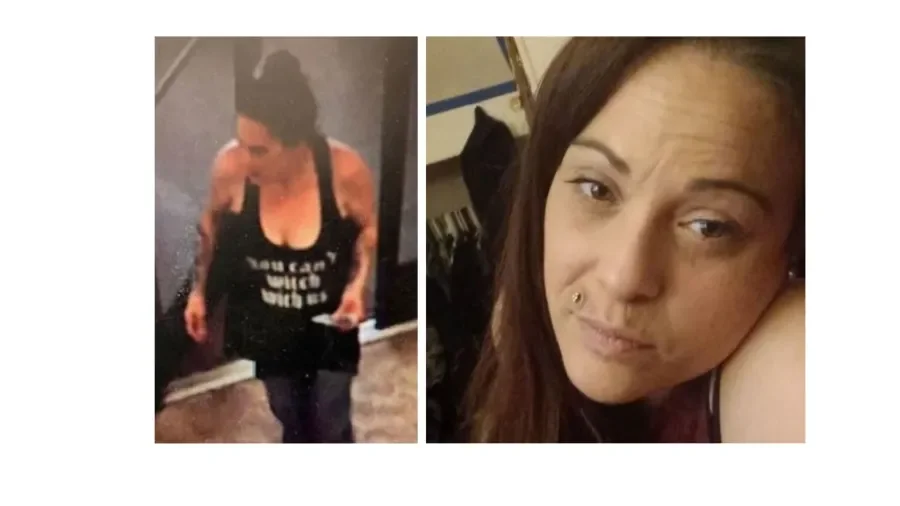
Eventually, detectives were able to confirm Amber’s last known sighting through surveillance footage at a dollar store on South Martin Luther King Jr. Boulevard in Lansing. The video is from June 25, 2023. Amber had gone there with a friend, bought some food items, and paid with a card. Because she was captured on surveillance video, that store visit became the last verified point in Amber’s timeline.
According to Marty, the person who went to the dollar store with Amber was questioned by police and cleared. He had an alibi. He was somewhere else when Amber disappeared, and Amber’s messages appear to support that part of the timeline..
Later that evening, sometime between about 9:00 and 9:30 p.m., Amber’s friend dropped her off at the house she had been staying at in Lansing – the same house she had told her family she didn’t feel safe at. Before she got there, Amber also shared her location with a friend.
Not long after arriving, Amber sent a message to one of the residents of the house saying she was at the front gate and needed to be let in. As far as her family has been able to determine, that message is the last known communication Amber ever sent.
Despite that, the people connected to that home were not interviewed by police until about a year and a half into the investigation. By then, they had already moved out.
In the meantime, Marty continued doing what she had been forced to do since the beginning of the case – investigating on her own, trying to piece it all together.
As she spoke with people in Amber’s social circle, she began to realize just how dangerous that environment had become. Many of the people Amber had been spending time with had extensive criminal histories and violent pasts. Marty also learned that people connected to the house were involved in drug trafficking. She said, “I don't know how big of a scale, but there were bad things going on in that house.”

CHAPTER 10: The House Behind the House
As Marty continued asking questions, the same two people kept coming up: a man named Paul, who lived at the house, and another woman named Lena.
Paul, Amber, and Lena had all spent time together, and they often gathered at Paul’s place. But Paul didn’t actually own the property. The home belonged to an older man, and Paul and others were essentially squatting in the garage behind the house.
Amber sometimes helped care for the homeowner, assisting with things like feeding him and helping him bathe.
But according to Marty, the more time Amber spent around Paul, the more afraid of him she became. She later learned that Amber had been telling people outside the family that she believed Paul might kill her.
In mid-June, Amber had been staying with Lena at her apartment. But according to people who spoke with Marty, the two women had some type of argument, and Amber could no longer stay there. With few other options, Amber ended up going back to Paul’s house.
Around that same time, Amber had also texted family members asking if she could come stay with them because she no longer felt safe where she was. Marty still does not know exactly why Amber believed Paul might hurt her.
One theory that surfaced during Marty’s investigation involved rumors that Amber was a snitch and was cooperating with police. When Amber was arrested in September 2022 after the adult foster care home raid, she was released on a personal recognizance bond. For reasons that are still unclear, some people in her circle assumed that Amber must have been providing information to police.
Amber’s family says they have never found any evidence that she was cooperating with law enforcement. In fact, they believe that would have been extremely out of character for her. Amber had always been fiercely loyal to the people in her life. That’s what led to her getting charges in the first place.
But the environment Amber had been living in was surrounded by meth use and other illegal activity, and in those kinds of circles, paranoia can spread quickly. Even a rumor that Amber might be talking to police could have put her in serious danger.

CHAPTER 11: The Cost of a Rumor
Marty says the rumors about Amber being a snitch are one of the areas where it has been hardest to separate fact from speculation. Over time, she has heard claims that Amber may have witnessed things connected to drug trafficking, gun trafficking, or even human trafficking. But there is no concrete evidence confirming exactly what Amber might have known, if anything.
It does seem very likely that Paul thought Amber was snitching. Marty told us that she received two voice recordings where Paul referred to Amber as being a snitch.
According to Marty, both recordings are poor quality and difficult to hear clearly. In one recording, Paul allegedly referred to Amber as a “rat.” In another, he is speaking to a different man and says he “took care of Amber” because she was going to snitch on him.
Marty says the other man in the recording pushes back, saying he does not believe Amber would have cooperated with police and that he never asked Paul to “take care” of anything.
One thing I’ve learned over the years while investigating my dad’s case is how powerful the label of “snitch” can be. In certain environments, that word carries a lot of weight. Sometimes more weight than actual evidence.
All it takes is a rumor – someone assuming you talked to police, or believing you might talk to police – and suddenly people start treating you differently. Suspicion spreads quickly, and the story can take on a life of its own. And the reality is, a lot of those assumptions are wrong.
During my investigation, I’ve heard plenty of people called snitches simply because they were arrested and released, or because someone saw them speaking to law enforcement. But being released from jail doesn’t mean someone cooperated. Talking to police doesn’t mean someone gave information. Sometimes it just means they were questioned and sent home.
But in communities where people are already living with fear, drugs, and violence, those distinctions don’t always matter. Once someone is labeled a snitch, the consequences can be serious – even if the label isn’t true. And in Amber’s case, whether those rumors were based on anything real or not, they may have put her in an incredibly dangerous position.
Over time, Marty has heard countless theories about what might have happened to Amber.
Some people claim Amber was dismembered and placed in trash bags. Others say she was buried in someone’s yard. Another rumor suggests she was “hot-shotted” – intentionally injected with drugs to cause an overdose – and then buried.
One family friend who spoke with people connected to Paul says they were told Amber may have suffered a possible overdose that night. According to that account, other people tried to step in and help her, but Paul would not allow it. Later, he had people help him bury trash bags that they believed contained Amber’s body.
At this point, none of these claims have been confirmed.
But they are the kinds of stories that begin circulating when someone disappears from a dangerous environment and no clear answers follow.

CHAPTER 12: Digging For Answers
There are also claims connected directly to the property where Amber was last believed to be.
The adult son of the homeowner has said he believes he knows what happened to Amber and claims she was buried in the woods near the house. The homeowner himself reportedly told a family friend that Amber was buried somewhere, but refused to say where.
Several friends and neighbors have also told Marty they believe Amber was buried in the woods about half a block from Paul’s house.
Marty took this information to police, hoping investigators would search the area. When that didn’t happen, she went there herself. She walked into the woods with a shovel and started digging. She would go out there hoping she would find something – and also hoping she wouldn’t. She never found anything.
At one point, Marty was told that once she got close to the right location, Amber’s body had been moved and placed in water somewhere nearby.
Something that families don’t always talk about publicly, that is incredibly difficul, is what it’s like to hear the rumors about someone you love.
When they disappear, the stories start circulating almost immediately. People begin speculating about what might have happened. And sometimes those theories are incredibly graphic and go against your own experience with them.
You start hearing details about how your loved one might have died, where their body might be, who might have been involved. And most of the time, you have no way of knowing whether any of it is true. But you still have to hear it, just in case there’s an answer in the middle of the rumors. People will say things casually, almost like they’re passing along gossip, and you’re standing there realizing they’re talking about someone you love.
It forces you into this strange position where you’re trying to listen carefully – because any piece of information could matter – while also trying to protect yourself from the emotional weight of what you’re hearing.
For families like Amber’s, every rumor carries two possibilities. Either it’s completely false… or it might be the closest thing they’ve heard to the truth. And living in that space, where you can’t fully dismiss the stories but you also can’t prove them, is something no family is ever really prepared for.
Trying to sort through all of this information has been incredibly difficult.
Many of the people who were around Amber during that time were struggling with addiction, and their accounts are often tangled and inconsistent. Some people are willing to talk about what they believe happened, but no one seems willing to admit their own role in it. Others appear to be too afraid to say anything at all.
According to Marty, even when people do provide information, investigators often hesitate to act on it because the sources are viewed as unreliable due to drug use or criminal histories. But for Marty, those are still the only people who were close enough to Amber in her final days to know anything.
CHAPTER 13: What They Know
Based on everything she has learned, Marty believes something bad happened to Amber after she went through the gates at Paul’s house that night. She believes several people were there. She does not know if all of them were involved, but she believes they know the truth about what happened.
And she also believes there are other people in the community who know what happened to Amber but are too afraid – or unwilling – to speak up. People who may have heard conversations, seen something unusual, or been told pieces of the story. She wants them to know that it isn’t too late to come forward and do the right thing.
Today, Amber Arnett is still missing.
According to Marty, the investigation technically remains open, but it does not appear to be active in the way families hope for. Police will follow up on tips when information is brought to them, but much of the work of gathering those tips has fallen on Marty herself – a role no parent should ever have to take on.
She continues speaking with people, following up on leads, and sharing everything she learns with law enforcement. While her relationship with police has gotten better over the years, she says they remain very careful about what information they share with her.
Marty believes it would help enormously if police could simply tell her whether certain areas are worth searching or if she is wasting precious time and resources looking in the wrong places. Because for Marty, the search for Amber never stops.
Every day she does what she can to keep Amber’s story visible. Marty has printed thousands of flyers and yard signs and posted them across the Lansing area.
She said, “People will get tired of seeing her face on the telephone pole and the yard signs but I'm not going away until I find her.”
Marty also works hard to make sure people understand who Amber really was – that she did not simply walk away. She was a human being who had endured tremendous trauma in her life, but who also had a huge heart.
Marty said, “I'd love people to remember her laugh and that she loved the kids and the older people and she was loyal to a fault. I want them to know that she made some mistakes, but she had a big heart and I believe she would have worked her way out of it.’’
She also hopes people will remember one more thing: to tell the people you love that you love them, because you never know when you might not get the chance again.
CHAPTER 14: Still Missing
Amber would be 42 years old today. She is 5’4” and weighed about 150 pounds at the time she disappeared. She was last seen wearing a black tank top with white writing, blue jeans, and black tennis shoes. Amber’s upper lip is pierced on the right side. She has two linear scars on her abdomen, a scar on her right hip, and a scar above the right side of her lip.
She also has large tattoos on both arms and both thighs, including the letters “M E R” with a heart on the inside of her wrist, flowers with the words “Beautiful Disaster” on her upper thigh, and writing on the opposite thigh.
A private $10,000 reward is being offered by Amber’s family and Derrick Levasseur for information leading to Amber’s whereabouts. Anyone with information about Amber’s disappearance is asked to contact the Lansing Police Department at 517-483-6679.
Amber Arnett was 39 years old when she disappeared. She had endured more hardship in her life than most people ever should, but she was still fighting to rebuild it. She was ready to face the consequences of her past, and she was finally talking about starting over.
But that opportunity was stolen from her and her family.
Today, the questions surrounding her disappearance remain unanswered. No one has been charged. No one has publicly explained what happened that night. And the truth about Amber’s final hours is still somewhere in the silence surrounding the people who were there.
Someone knows what happened to Amber Arnett.
And until that person speaks up, her family will continue searching – because Amber deserves answers. And she deserves to be found.
CREDITS:
Thanks for listening to Frozen Files a Yes! Podcast
To help this show reach a wider audience and help these victims and their families gain more attention on their cases, please follow, subscribe, rate, and review wherever you are listening. Your curiosity could crack the case.
Thanks for listening to Frozen Files a Yes! Podcast
Recorded in Los Angeles at KeyFrame Studios
This episode was produced, written, hosted, and edited by Madison McGhee
Produced by Nick Baudille
Produced, written, and researched by Haley Gray
Production design by Stephen Hauser
Creative direction by AJ Christianson
All additional sources are linked in the show notes.
SOURCES: